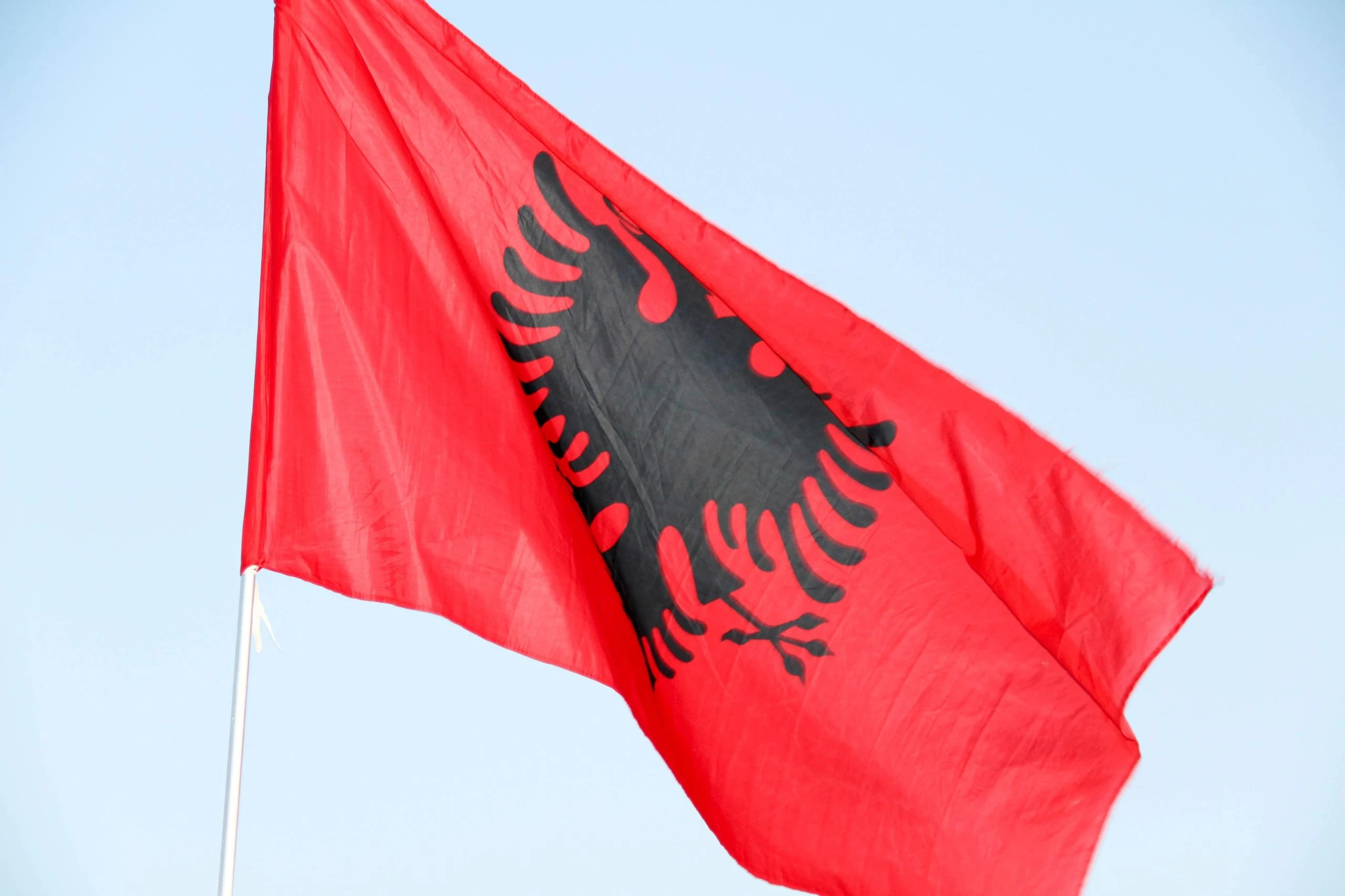
For the past seven years, the population of Albania has been living under a blanket ban on sports betting. Since 2019, betting halls, slot halls, and all online gambling verticals have been prohibited. With unregulated sports betting GGR estimated at $126 million last year, international operators may see an opportunity – but the potential for channelisation remains unknown.
This July, however, the government announced it had put the finishing touches to a new framework that will guide the partial reopening of the sports betting market. Once the licensing process is complete, up to 10 online operators will be able to take wagers from customers in the Balkan nation.
The new regime has been a long time coming. As early as 2022, Albanian Prime Minister Edi Rama admitted that, despite the ban, the betting economy was still “flourishing” online. “We are talking about taking this activity out of the black economy and bringing the profits into the light, because nobody can block it – not even China,” Rama said at the time.
But despite passing legislation to reopen the market back in 2024, it has taken more than two years to flesh out the details of the new regime.
Even now, several unknowns remain. When will the first licensing round begin? How many licences will be available? And, most significantly: has more than half a decade of prohibition dulled the appetite for betting?
Why was sports betting banned?
Back in 2018 – the year parliament voted to bring in the ban – Albania’s sports betting market was generating an annual turnover of €700 million. Retail betting was highly concentrated, with 4,000 betting shops serving a population of just over 2.8 million.
“There were a lot of betting offices in Albania – everywhere, near schools and in local neighbourhoods,” explains Hendri Hanaj, founder and partner at commercial law firm Hashtag Lawyers. “The government was forced to do something because it was getting out of control.”
According to Hanaj, small-scale betting was also incredibly widespread. “Everyone was betting,” he says. “Not hundreds or thousands of euros, but everyone was betting in small amounts.”
The rapid rise of the betting sector was causing growing unease among politicians, fuelling fears of widespread addiction and its impact on low-income households. Prime Minister Rama, a former basketball player, also raised concerns about the integrity of sports and alleged that some betting companies had links to organised crime.
“We are waging a frontal war with the evil entrenched deeply in our society over the years,” he told parliament in October 2018, ahead of the vote to ban betting.
In the years following prohibition, however, it became clear that betting had not disappeared: it had simply been driven underground.
According to initial estimates from Gaming Compliance International (GCI), Albania’s unregulated online sports betting market generated GGR of $117 million in 2024, rising to $126 million in 2025. When online casino and poker are included, total unregulated online GGR reached an estimated $229 million last year.
What will the new market look like in Albania?
Despite his apparent U-turn, Rama is clear that he doesn’t want to return to the “havoc” of widespread retail betting in Albania.
This time around, only online betting will be permitted. Brick-and-mortar betting shops and slot halls will continue to be barred entirely, with casinos remaining restricted to a handful of premises in five-star hotels.
Entry to the market will also be tightly controlled. Albania’s new sports betting legislation paves the way for “up to” 10 licensees, with the exact number set to be decided by the Licensing Commission when it opens the application process.
This means that just a handful of operators could be let in at first, testing the waters of the newly regulated market.
The government forecasts that the new regime could bring in around ALL2bn (€20 million) in public revenues per year, with 15% of GGR going directly into a “special fund” for culture, sport, technology and innovation.
However, legal expert Hanaj believes the years of the ban may have dulled Albania’s fervour for sports betting.
“There is an appetite for sports, but it has faded over time,” he says. “People like my father, or my cousins who are older than me, like sports more. Of course, people will bet, but I don’t think it will be as massive as before.”
Due to digital payments, the online-only market will also be “easier for the government to monitor and control”, he adds.
What we know so far about the framework
As Hanaj points out, traceability and oversight will be a key part of Albania’s new framework. Taking advantage of the digital-only structure, players must sign up online using a national identity card. Cash betting is prohibited, and payments must be processed by Albanian banks, licensed electronic money institutions or payment providers.
For their part, operators must monitor all transactions and retain player records for at least three years. They must also enforce the national self-exclusion register, with information on excluded players stored digitally. According to media reports, wider family members will be able to ask for a relative to be barred from gambling, rather than the responsibility lying with only the player themself.
There will also be an obligation to inform players of the risks of gambling and chances of winning, as well as directing them to sources of support. As BIRN recently reported, however, Albania currently has no dedicated gambling counselling or rehabilitation centre.
In June this year, the government also finalised the guidelines for suspending and revoking betting licences. Operators who violate licensing rules twice within a three-year period can see their licence suspended for between 30 days and two years. During this time, they will be unable to take bets. If a third violation occurs, the licence can be revoked.
As well as the 15% GGR tax for the “special fund”, operators will also pay Albania’s standard 15% corporation tax rate, in addition to local taxes and the licence fee. The latter, which is determined by bids but set at a minimum of ALL400 million (€4 million), will be paid in instalments over the 10-year licensing term.
Who’s likely to get a licence?
Operators hoping to get a slice of the Albanian market will face some significant barriers to entry. They will have to be registered as an Albanian joint-stock company, demonstrate gambling experience across at least three EU or OECD markets, have a turnover of at least ALL2 billion (€20 million) in the last financial year and hold at least ALL40 million (€400,000) in share capital.
Based on these key criteria, the licences will be awarded via a points-based system. Up to 30 points will be awarded based on offers for the licence fee, with the highest bidder receiving the full 30 points. Additionally, up to 30 points will be awarded for gambling-sector experience, 20 for governance and organisation, 15 for technology and software and five for a three-year business plan.
In Hanaj’s view, these criteria seem designed to favour large international companies.
“There are a lot of conditions to get the licence and no Albanian company, at least, would be able to meet them – or at least none that are interested in betting,” he explains. “It’s not that Albanian companies are not capable – of course they are capable of being compliant. I think the government is looking for companies that have been doing this for many years, which would be better for the market.”
A clause in the latest regulations seems to support this view – once the Licensing Commission decides to launch the competitive procedure, it must put out a call for applications within seven days. According to the guidelines, this must be done on its website, on Albania’s Public Notices Bulletin, and “in two international newspapers”.
What we still don’t know
In July 2026 – more than two years after parliament approved the partial reopening of the market – Albania’s Gambling Supervision Authority said all eight implementing regulations had been finalised.
But as operators wait for the starting gun to fire, authorities have remained tight-lipped about the exact timeline for implementation. At the time of publishing, the Ministry of Finance had not responded to a request from iGB to clarify the timeline.
With Albania setting its sights on EU accession by around 2030, the licences could be awarded in the coming year or two, Hanaj says. “But that’s just my opinion,” he adds.
What also remains unclear is exactly how many of the 10 licences will be awarded and whether the legal market will be big enough to support more than a handful of companies.
Nevertheless, Hanaj believes that the low incremental costs of starting an Albanian-facing betting site and “manageable” licence fees will make the market an attractive prospect for large international operators.
Albania was once a hive of fervent betting activity, punching well above its demographic weight in wagering volumes. Since betting reached its peak in 2018, however, Albania’s population has fallen from 2.8 million to 2.75 million, and it remains a relatively low-income country. But in gambling and other sectors, the Balkan nation has a track record of occasionally defying the economic odds.
“There are around 12 banks in Albania and I don’t think the market supports that,” Hanaj points out. “But they are still here and still working.”
过去七年来,阿尔巴尼亚民众一直生活在体育博彩全面禁令之下。自2019年起,博彩厅、老虎机厅以及所有在线赌博垂直领域均被禁止。去年,未受监管的体育博彩GGR估计达1.26亿美元,国际运营商或许看到了机会——但渠道化的潜力仍属未知。
然而今年7月,政府宣布已完成新框架的最后收尾工作,该框架将指导体育博彩市场的部分重新开放。一旦许可流程完成,最多10家在线运营商将能够接受这个巴尔干国家客户的投注。
这一新制度酝酿已久。早在2022年,阿尔巴尼亚总理埃迪·拉马就承认,尽管有禁令,博彩经济在网上仍然“蓬勃发展”。“我们谈论的是将这一活动从黑色经济中剥离出来,让利润见光,因为没有人能阻止它——连中国都做不到,”拉马当时表示。
但尽管早在2024年就通过了重新开放市场的立法,却花了两年多时间才敲定新制度的细节。
即便现在,仍有若干未知数。首轮许可何时开始?将发放多少张牌照?而最重要的是:五年多的禁令是否已经消磨了人们的博彩胃口?
体育博彩为何被禁?
早在2018年——议会投票通过禁令的那一年——阿尔巴尼亚的体育博彩市场正创造着7亿欧元的年营业额。实体博彩高度集中,4,000家投注站服务于仅略超280万的人口。
“阿尔巴尼亚有很多投注站——到处都是,学校附近、社区里都有,”商业律师事务所Hashtag Lawyers的创始人兼合伙人Hendri Hanaj解释道。“政府被迫采取行动,因为情况已经失控。”
据Hanaj称,小额博彩也极为普遍。“每个人都在下注,”他说。“不是数百或数千欧元,但每个人都在小额投注。”
博彩业的迅速崛起在政界引发了日益加剧的不安,助长了对普遍成瘾及其对低收入家庭影响的担忧。曾任篮球运动员的拉马总理还对体育诚信提出关切,并声称一些博彩公司与有组织犯罪有关联。
“我们正在与多年来深深扎根于我们社会的邪恶进行正面战争,”他在2018年10月议会投票禁止博彩前对议会表示。
然而,在禁令实施后的几年里,情况变得清晰:博彩并未消失,只是转入了地下。
根据Gaming Compliance International(GCI)的初步估计,阿尔巴尼亚未受监管的在线体育博彩市场在2024年创造了1.17亿美元的GGR,2025年升至1.26亿美元。若计入在线赌场和扑克,去年未受监管的在线GGR总额估计达到2.29亿美元。
阿尔巴尼亚的新市场将是什么样?
尽管态度明显大转弯,拉马明确表示他不想回到阿尔巴尼亚实体博彩泛滥的“浩劫”之中。
这一次,只允许在线博彩。实体投注站和老虎机厅将继续被完全禁止,赌场仍仅限于五星级酒店内的少数场所。
市场准入也将受到严格控制。阿尔巴尼亚新的体育博彩立法为“最多”10家持牌商铺平了道路,具体数量将由许可委员会在启动申请程序时决定。
这意味着最初可能只放行少数几家运营商,以试探新监管市场的深浅。
政府预计,新制度每年可带来约20亿列克(2,000万欧元)的公共收入,其中15%的GGR将直接进入用于文化、体育、技术和创新的“特别基金”。
然而,法律专家Hanaj认为,多年的禁令可能已经消磨了阿尔巴尼亚人对体育博彩的热情。
“人们对体育有热情,但已随时间消退,”他说。“像我父亲,或者比我年长的表亲,更喜欢体育。当然,人们会下注,但我认为不会像以前那样大规模。”
他补充说,由于数字支付,纯在线市场也将“更便于政府监控和管控”。
关于该框架,我们目前所知
正如Hanaj所指出的,可追溯性和监督将是阿尔巴尼亚新框架的关键部分。利用纯数字结构,玩家必须使用国民身份证在线注册。现金投注被禁止,支付必须由阿尔巴尼亚银行、持牌电子货币机构或支付服务商处理。
运营商方面,必须监控所有交易,并将玩家记录保留至少三年。他们还必须执行国家自我排除登记册,被排除玩家的信息以数字方式存储。据媒体报道,更广泛的家庭成员将能够要求禁止某位亲属赌博,而非仅由玩家本人承担责任。
此外还有义务告知玩家赌博的风险和获胜几率,并引导他们寻求支持资源。然而,正如BIRN最近报道的那样,阿尔巴尼亚目前没有专门的赌博咨询或康复中心。
今年6月,政府还敲定了暂停和吊销博彩牌照的指导方针。在三年内两次违反许可规则的运营商,其牌照可被暂停30天至两年。在此期间,他们将无法接受投注。若发生第三次违规,牌照可被吊销。
除了为“特别基金”缴纳15%的GGR税外,运营商还需缴纳阿尔巴尼亚15%的标准企业所得税,以及地方税和牌照费。后者由竞标决定,但最低为4亿列克(400万欧元),将在10年许可期内分期支付。
谁可能获得牌照?
希望分得阿尔巴尼亚市场一杯羹的运营商将面临一些重大的准入门槛。他们必须注册为阿尔巴尼亚股份公司,证明在至少三个欧盟或OECD市场拥有博彩经验,上一财年营业额至少达到20亿列克(2,000万欧元),并持有至少4,000万列克(40万欧元)的股本。
基于这些关键标准,牌照将通过积分制授予。牌照费报价最高可获30分,出价最高者获得全部30分。此外,博彩行业经验最高可获30分,治理和组织20分,技术和软件15分,三年商业计划5分。
在Hanaj看来,这些标准似乎旨在偏向大型国际公司。
“获得牌照有很多条件,至少没有一家阿尔巴尼亚公司能够满足——或者说没有一家对博彩感兴趣的公司能满足,”他解释道。“并不是阿尔巴尼亚公司没有能力——它们当然有能力合规。我认为政府正在寻找已经从事这一行业多年的公司,这对市场更有利。”
最新法规中的一项条款似乎支持这一观点——一旦许可委员会决定启动竞争程序,它必须在七天内发出申请征集。根据指导方针,这必须在其网站、阿尔巴尼亚公共公告公报以及“两家国际报纸”上发布。
我们仍不知道的事
2026年7月——在议会批准市场部分重新开放两年多后——阿尔巴尼亚博彩监管局表示,全部八项实施条例均已敲定。
但在运营商等待发令枪响之际,当局对实施的确切时间表仍守口如瓶。截至发稿时,财政部尚未回应iGB关于澄清时间表的请求。
Hanaj表示,随着阿尔巴尼亚将目标定在2030年左右加入欧盟,牌照可能在未来一两年内发放。“但这只是我的看法,”他补充道。
同样不清楚的是,10张牌照究竟会发放多少张,以及合法市场是否足够大,能支撑超过少数几家公司。
尽管如此,Hanaj认为,开设面向阿尔巴尼亚的博彩网站的增量成本较低,加上“可控的”牌照费,将使该市场对大型国际运营商具有吸引力。
阿尔巴尼亚曾经是博彩活动狂热的蜂巢,其投注量远超其人口规模应有的水平。然而,自2018年博彩达到顶峰以来,阿尔巴尼亚人口已从280万降至275万,且仍是一个相对低收入的国家。但在博彩和其他领域,这个巴尔干国家有着偶尔逆经济形势而动的记录。
“阿尔巴尼亚大约有12家银行,我认为市场支撑不了这么多,”Hanaj指出。“但它们仍然在这里,仍在运营。”