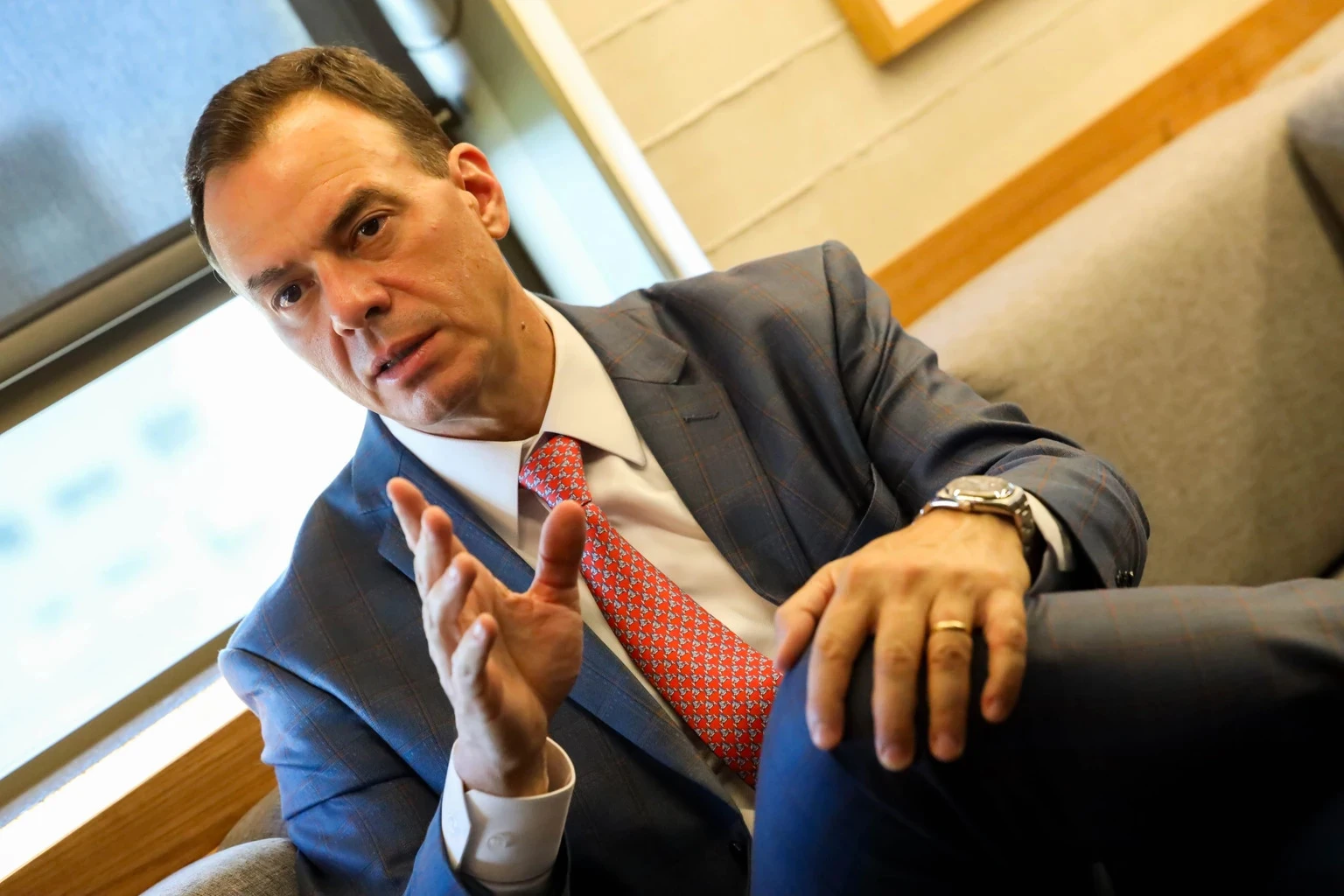
During the conversation, ANJL President Plínio Lemos Jorge highlights the growth of the betting industry in Brazil and the significant increase in revenue collected during the first five months of the year.
In his view, these results confirm the economic and social importance of the legalised market. “We went from BRL3.1 billion ($620 million) between January and May 2025 to BRL5.89 billion this year,” he says. “This leap reflects the progress of the regulated sector, with benefits flowing back to society through tax contributions.”
According to Lemos Jorge, the World Cup likely boosted the figures for June, which have not yet been officially released. “It was the first World Cup played with the Brazilian market already regulated. Football brought consumers closer to responsible entertainment platforms,” he observes.
He notes that authorised operators adhered to strict rules during the tournament. “The SPA reinforced requirements regarding integrity, advertising and communication prior to the competition.” For Lemos Jorge, this is crucial for the sector’s sustainability.
The ANJL president highlighted in-person activations at bars and restaurants, as well as initiatives involving fans. “These initiatives helped digital brands create experiences beyond the screen.”
New rules
Lemos Jorge views the new federal advertising regulations as an added safeguard for both bettors and operators. The push by the ANJL for clearer, more responsible and transparent advertising places the betting sector at a pivotal moment.
On the other hand, he criticises municipal bans on advertising in public spaces. In his view, the Constitution reserves authority over commercial advertising for the federal government. “Divergent local rules could create legislative confusion and legal uncertainty for operators,” is his assessment.
Political pressure on betting companies is expected to intensify during the second half of the year due to the coming elections. According to him, the industry must remain resilient and committed to responsible gaming. “Once this turbulent period passes, we believe the market will likely face less criticism,” he predicts.
The major challenge that must be tackled is illegal websites. They remain a significant factor and could expand if regulations render the formal market unviable. Lemos Jorge is determined. “We cannot let our guard down,” he states. “What encourages us is that the government, as a whole, has recognised the need to combat this issue.”
iGaming Business – How do you assess the results of the sports betting and online gaming sector in the first half of 2026?
Plínio Lemos Jorge – The Federal Revenue Service has not yet released the figures for the first half of the year, but data for the first five months show that tax revenue rose from BRL3.1 billion from January through May 2025 to BRL 5.89 billion this year. This jump highlights the growth of the regulated sector and its importance, given the benefits it brings to Brazilian society through tax collection.
iGB – Is it already possible to estimate how much the World Cup contributed to the increase in revenue for fixed-odds betting operators?
PLJ – We do not yet have the official market figures for June, but the World Cup will certainly have a significant impact on the results achieved during that period. It was the first World Cup to take place with a regulated market in effect in Brazil.
Everyone knows that Brazilians are passionate about soccer. Now, fans of the sport have been able to experience the entertainment offered by this sector amidst the World Cup atmosphere. Substantial revenue is the result of work that is well-executed, well-targeted and conducted responsibly for the public.
iGB – Did the regulated sector perform well during the World Cup? Were the rules properly followed?
PLJ – Yes. It is important to highlight that all operators authorised by the Ministry of Finance operate under a strict regulatory framework. This encompasses not only Law No. 14.790/2023 but also the ordinances issued by the Secretariat of Prizes and Bets (SPA).
In the lead-up to the World Cup, the SPA emphasised its commitment to the sector’s integrity and responsibility. One week before the tournament, Technical Note No. 3620 was issued, establishing specific rules regarding communication, advertising, and marketing for betting operators.
As the regulatory authority, the SPA has the power to oversee operations and impose sanctions in the event of non-compliance with the law.
iGB – What were the main positive practices during the World Cup, and what wasn’t followed properly and serves as a warning for operators to improve their practices?
PLJ – Physical activations by betting companies were certainly a highlight of this World Cup – ranging from partnerships with bars and restaurants to the distribution of fan kits, among other initiatives. Through these efforts, brands operating in the digital space foster a closer connection with consumers, offering them a genuine experience beyond the screen.
It is up to the organisation to emphasise that transparency, balance and common sense must always guide the sector’s actions. This benefits consumers and businesses alike, while also strengthening the market.
iGB – A great deal of criticism has surfaced regarding advertising during the World Cup. Was it a lack of commitment on the part of the industry, or an inadequate analysis by those who do not understand the sector?
PLJ – Industry advertising has faced criticism since the regulated market began – primarily in sectors that view betting companies as a perceived threat to their own businesses, a notion that has been thoroughly debunked.
Any potential lapses that may have occurred during the World Cup will be duly addressed by Conar, the SPA itself and, if applicable, Senacon (an agency linked to the Ministry of Justice). The fact remains that we cannot say for certain whether such lapses occurred. Everyone is aware of the rules, which are clearly defined; therefore, non-compliance cannot be justified by a claim of ignorance.
iGB – The government has just issued new advertising regulations. How does ANJL view this tightening of measures to curb the expansion of the regulated market?
PLJ – ANJL views this development with confidence, seeing it as an extra layer of protection for both bettors and operators. Even more transparent and informative communication, through new mandatory elements in advertising, is likely to make the market even safer and more responsible than it already is.
iGB – The city of Rio de Janeiro is implementing bans on advertising in public spaces. The city of João Pessoa has done the same. Now, São Paulo and other state capitals and major cities want to follow suit. What is your take on these measures?
PLJ – From a legal standpoint, these are major misconceptions. And it’s not just me saying this. The Federal Constitution clearly states, in Article 22, that legislation on commercial advertising falls exclusively within the jurisdiction of the federal government. The consumer protection argument is valid regarding specific institutions, such as state and municipal Procons (Consumer Defence and Protection Programmes). They act as a sort of mediator for consumer complaints against companies.
It is inconceivable, however, for different advertising rules to be established across 26 states and the Federal District, as well as more than 5,000 municipalities nationwide. Beyond causing immense legislative confusion, given that advertising involves various media, such as digital platforms and broadcasting, this creates unprecedented legal uncertainty for industry operators.
iGB – Isn’t it time for the industry to come together to establish more consistent self-regulation of advertising so that it can be better understood by the public?
PLJ – The self-regulation framework resulting in Annex X, as developed jointly by ANJL, IBJR (Brazilian Institute for Responsible Gambling), and Conar (National Council for Advertising Self-Regulation), is highly robust and stringent. The text is also easy to understand. The industry had been using the slogan “play responsibly” in the same way the beer industry uses “drink in moderation”. Yet, all scrutiny and criticism have been, and continue to be, directed solely at the betting industry, as if compulsive behaviour were unique to this sector.
We believe that the new ordinances from the Ministry of Finance will reinforce the message of balance and responsibility, yielding positive results for the sector itself.
iGB – Brazil’s second half of the year will be dominated by the elections. How will the electoral process affect the regulated sector, given that the leading candidates have singled out betting companies as “scapegoats”?
PLJ – Unfortunately, this has been the case since the beginning of this year, with an eye already on the upcoming elections. The industry will have to remain resilient and reinforce its commitment to responsible and ethical gaming. Once this turbulent period has passed, we believe the market will be less of a target for criticism, as it will already be fully integrated into the economy and the daily life of Brazilian society.
iGB – Do illegal websites still account for nearly half of the Brazilian online betting and gaming market? How can we effectively and sustainably reduce their market share?
PLJ – They do. And this share is likely to grow even further if initiatives are introduced that undermine business sustainability in Brazil, such as tax hikes or stricter advertising restrictions.
We have already observed a decrease in the percentage of illegal sites. However, we cannot let our guard down; the fight must continue. We are pleased that the government has recognized the need to combat this issue, and our laboratory, operating in partnership with Anatel (Brazil’s National Telecommunications Agency) and the SPA, now serves as the central hub for information. The facility is dedicated to monitoring, intelligence gathering and technical analysis of the betting market.
在对话中,ANJL主席Plínio Lemos Jorge强调了巴西博彩行业的增长,以及今年前五个月税收收入的显著增加。
在他看来,这些结果证实了合法化市场的经济和社会重要性。“我们从2025年1月至5月的31亿雷亚尔(6.2亿美元)增长到今年的58.9亿雷亚尔,”他表示。“这一飞跃反映了受监管行业的进步,其收益通过税收贡献回馈社会。”
据Lemos Jorge称,世界杯可能提振了6月份的数据,但该数据尚未正式公布。“这是巴西市场已经受监管后举办的第一届世界杯。足球让消费者更接近负责任的娱乐平台,”他观察到。
他指出,授权运营商在赛事期间遵守了严格的规则。“SPA在赛事前加强了关于诚信、广告和传播的要求。”对Lemos Jorge来说,这对行业的可持续性至关重要。
ANJL主席强调了在酒吧和餐厅进行的线下活动,以及涉及球迷的举措。“这些举措帮助数字品牌创造了超越屏幕的体验。”
新规则
Lemos Jorge认为新的联邦广告法规为投注者和运营商提供了额外的保障。ANJL推动更清晰、更负责任和更透明的广告,使博彩行业处于一个关键节点。
另一方面,他批评了市政当局对公共场所广告的禁令。在他看来,宪法将商业广告的管辖权保留给联邦政府。“相互矛盾的地方规则可能给运营商带来立法混乱和法律不确定性,”这是他的评估。
由于即将到来的选举,预计下半年对博彩公司的政治压力将加剧。据他所说,该行业必须保持韧性并致力于负责任博彩。“一旦这段动荡时期过去,我们相信市场可能会面临更少的批评,”他预测道。
必须解决的主要挑战是非法网站。它们仍然是一个重要因素,如果法规使正规市场无法生存,它们可能会扩张。Lemos Jorge态度坚定。“我们不能放松警惕,”他表示。“令我们鼓舞的是,政府整体上已经认识到打击这一问题的必要性。”
iGaming Business – 您如何评估2026年上半年体育博彩和在线游戏行业的成果?
Plínio Lemos Jorge – 联邦税务局尚未公布上半年的数据,但前五个月的数据显示,税收收入从2025年1月至5月的31亿雷亚尔上升到今年的58.9亿雷亚尔。这一跃升凸显了受监管行业的增长及其重要性,因为它通过税收为巴西社会带来了益处。
iGB – 是否已经可以估算世界杯对固定赔率博彩运营商收入增长的贡献?
PLJ – 我们还没有6月份的官方市场数据,但世界杯肯定会对该期间取得的成果产生重大影响。这是第一届在巴西受监管市场生效的情况下举办的世界杯。
众所周知,巴西人热爱足球。现在,这项运动的球迷们能够在世界杯氛围中体验该行业提供的娱乐。可观的收入是执行良好、目标明确且对公众负责任的工作成果。
iGB – 受监管行业在世界杯期间表现良好吗?规则是否得到了适当遵守?
PLJ – 是的。重要的是要强调,所有获得财政部授权的运营商都在严格的监管框架下运营。这不仅包括第14.790/2023号法律,还包括奖金和博彩秘书处(SPA)发布的法令。
在世界杯前夕,SPA强调了其对行业诚信和责任的承诺。赛事前一周,发布了第3620号技术说明,为博彩运营商的传播、广告和营销制定了具体规则。
作为监管机构,SPA有权监督运营并在违反法律的情况下实施制裁。
iGB – 世界杯期间的主要积极做法是什么?哪些方面没有被正确遵守,可以作为运营商改进做法的警示?
PLJ – 博彩公司的线下活动无疑是本届世界杯的一大亮点——从与酒吧和餐厅的合作到球迷套装的发放,以及其他举措。通过这些努力,在数字领域运营的品牌与消费者建立了更紧密的联系,为他们提供了超越屏幕的真实体验。
本组织有责任强调,透明度、平衡和常识必须始终指导行业的行动。这既有利于消费者和企业,也能加强市场。
iGB – 关于世界杯期间的广告,出现了大量批评。这是行业缺乏承诺,还是那些不了解该行业的人分析不当?
PLJ – 自受监管市场开始以来,行业广告一直面临批评——主要来自那些将博彩公司视为对其自身业务构成威胁的行业,这种观念已被彻底驳斥。
世界杯期间可能发生的任何潜在违规行为都将由Conar、SPA本身以及(如适用)Senacon(隶属于司法部的机构)妥善处理。事实是,我们无法确定此类违规行为是否发生。每个人都清楚规则,规则有明确定义;因此,不合规不能以不知情为由进行辩解。
iGB – 政府刚刚发布了新的广告法规。ANJL如何看待这种旨在遏制受监管市场扩张的收紧措施?
PLJ – ANJL对这一发展充满信心,将其视为对投注者和运营商的额外保护层。通过广告中新的强制性元素实现更透明、更具信息性的传播,可能会使市场比现在更加安全和负责任。
iGB – 里约热内卢市正在实施公共场所广告禁令。若昂佩索阿市也采取了同样的措施。现在,圣保罗和其他州首府及主要城市也想效仿。您对这些措施有何看法?
PLJ – 从法律角度来看,这些是重大的误解。而且不只是我这么说。联邦宪法第22条明确规定,商业广告立法完全属于联邦政府的管辖范围。消费者保护论点对于特定机构是有效的,例如州和市级Procons(消费者保护与防卫计划)。它们充当消费者对公司投诉的某种调解者。
然而,在26个州和联邦区以及全国5000多个城市建立不同的广告规则是不可思议的。除了造成巨大的立法混乱(鉴于广告涉及各种媒体,如数字平台和广播),这还给行业运营商带来了前所未有的法律不确定性。
iGB – 行业是否应该团结起来,建立更一致的广告自律,以便公众更好地理解?
PLJ – 由ANJL、IBJR(巴西负责任博彩研究所)和Conar(全国广告自律委员会)共同制定的附件X所产生的自律框架非常健全和严格。文本也易于理解。该行业一直使用“负责任地玩”的口号,就像啤酒行业使用“适度饮酒”一样。然而,所有的审查和批评一直且仍然只针对博彩行业,仿佛强迫性行为是该行业独有的。
我们相信,财政部的新法令将强化平衡和负责任的信息,为行业本身带来积极成果。
iGB – 巴西下半年将被选举主导。选举过程将如何影响受监管行业,鉴于主要候选人将博彩公司列为“替罪羊”?
PLJ – 不幸的是,自今年年初以来情况一直如此,已经在着眼于即将到来的选举。该行业将不得不保持韧性,并加强其对负责任和道德博彩的承诺。一旦这段动荡时期过去,我们相信市场将不再是批评的目标,因为它将已经完全融入经济和巴西社会的日常生活。
iGB – 非法网站是否仍占巴西在线博彩和游戏市场近一半?我们如何才能有效且可持续地减少它们的市场份额?
PLJ – 是的。如果出台破坏巴西商业可持续性的举措,如增税或更严格的广告限制,这一份额可能会进一步增长。
我们已经观察到非法网站的比例有所下降。然而,我们不能放松警惕;斗争必须继续。我们很高兴政府已经认识到打击这一问题的必要性,我们的实验室与Anatel(巴西国家电信局)和SPA合作运营,现在作为信息中心。该设施致力于博彩市场的监控、情报收集和技术分析。