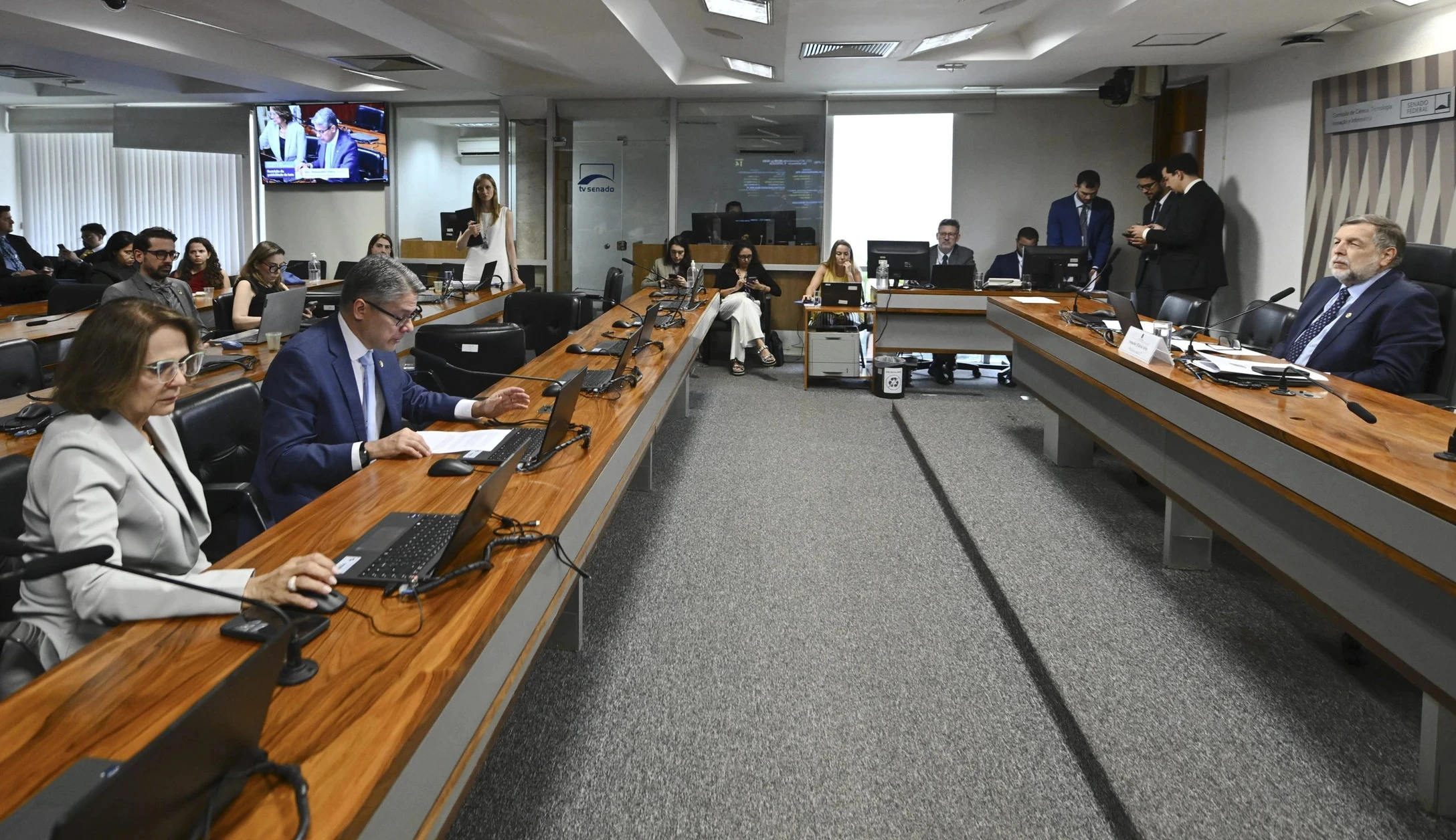
On Wednesday, the Science and Technology Committee (CCT) approved a project furthering restrictions on advertising and sponsorship of betting.
The proposal also established criteria for risk classification of products and clarifying the obligations of operators and platforms. The measure would likely grant the illegal market the opportunity to continue expanding, as it would be unaffected by the new rules. The committee approved a request for urgency for analysis by the Senate Plenary.
Authored by Senator Damares Alves and six other senators, Bill 2.470/2026 amends the Betting Law, which regulates fixed-odds betting, with measures aimed at protecting mental health, consumers, and the family economy. The bill received a favourable opinion, in the form of a substitute from Senator Alessandro Vieira.
“This is a non-partisan initiative. It stems from society’s current understanding of the extent of the damage caused by so-called betting,” the rapporteur stated.
On Tuesday, the CCT held a public hearing to discuss the project. Government and betting sector representatives participated in the debate and presented divergent positions on the proposed measures.
Advertising
The approved text includes a series of restrictions on advertising for online betting and gambling:
Advertising prohibited: Direct or indirect marketing communication regarding betting on radio and television, newspapers, magazines, outdoor media, streaming services, podcasts, social networks, video platforms, apps, websites, blogs, forums, search engines and other internet environments is prohibited.
Messaging and targeted advertising: The restriction also extends to instant messaging, SMS, email, notifications, advertising automatically targeted by algorithms, telemarketing – which shows ads again to people who have already been exposed to certain content – and profiling based on user behaviour.
Other means of dissemination: The prohibition includes advertising in electronic games and esports, sports uniforms and equipment, public transport and affiliate content, tipsters, comparison sites and other paid intermediaries.
Promotions and benefits: Bonuses, promotional credits, free bets, cashback, free spins, rewards and loyalty programmes used to encourage membership, retention or return to betting are prohibited.
Misleading messages: Messages that present betting as a risk-free activity, a source of income, a financial solution, a sure profit, a guaranteed method or a way to recover losses cannot be disseminated.
The restriction does not extend to strictly institutional communication made through the authorised operator’s own official channels, such as websites, apps, internal platform areas and customer service channels. In these spaces, information should be limited to company identification, official channels, access rules, self-exclusion and blocking mechanisms and mandatory warnings.
These channels may not contain promises of winnings, bonuses, invitations to bet, boosting or features designed to attract and retain user attention. The operator will also be responsible for the actions of affiliates, agencies, influencers, and other third parties who are paid or incentivised for commercial promotion.
Sponsorship
Sponsorship by betting companies would be prohibited for clubs and other sports entities, federations, leagues, competitions, sports broadcasts, cultural events, shows, educational and social projects, philanthropic entities, civil society organisations, political parties, candidates and election campaigns, as well as digital influencers, athletes, artists and celebrities.
The ban covers brand exposure, naming rights, licensing, ambassadors and other forms of promotional association. The text provides a 24-month period for adapting or terminating sponsorship contracts, and the signing, renewal, or extension of contracts will only be permitted if the respective term of validity expires within those 24 months.
Sponsorship activities involving children and adolescents, schools, and youth sports categories are also prohibited. Betting companies will also be banned from associating their brand with campaigns or projects related to mental health, suicide prevention, financial education, treatment of gambling disorders, social assistance, prevention of over-indebtedness or protection of vulnerable families.
Protection
Operators may not use data from individuals who have self-excluded, are undergoing treatment, or have requested to block marketing in order to attempt to reactivate them. Repeated or intrusive messages and offers directed at users who have reduced their gaming frequency, registered significant losses, triggered limits or shown signs of risky behaviour are also prohibited.
The text also bans exploiting situations of economic crisis, unemployment, debt, emotional distress, grief, anxiety, depression, loneliness, or other conditions of vulnerability to attract, retain or reactivate gamblers.
Operators must maintain permanent mechanisms for age verification, self-exclusion, voluntary time and wagering limits, and information on the user’s own gambling behaviour. Self-exclusion must be effective with all authorised operators.
The text also prohibits bets placed using credit cards, the use of predictive models to identify moments of greater vulnerability, and platform design mechanisms that hinder a conscious decision to stop betting, leave the service, or activate limits and blocks. Operators must maintain permanent alerts about compulsive gambling, indebtedness and asset loss, and adopt verifiable protocols for identifying risky behaviour.
Risk classification
The proposal establishes criteria for classifying products according to their potential for harm. Among the characteristics considered are instantaneous or short-lived results, continuous repetition at short intervals, use of random mechanisms to determine the outcome, intermittent rewards, near-miss incentives, incentives to recover losses and features that make it difficult to stop betting or induce successive, impulsive, or increasingly valuable bets.
Products offered to the public must undergo prior evaluation by a competent body of the Federal Executive Branch, to be defined in regulations. Products classified as high-risk will be subject to specific harm reduction measures. Products with excessive risk may not be offered. This category includes products with outcomes determined by random mechanisms, continuous cycles and variable rewards, such as roulette, slot machines, collision games and simulated virtual sports.
Furthermore, the text maintains obligations for monitoring and institutional cooperation, with the provision of aggregated and anonymised data to the competent authorities. It also provides for actions by the executive branch aimed at monitoring the impacts of betting, training health professionals, updating care protocols and periodically disseminating information on the effects of the activity.
Oversight
Application providers, digital platforms, hosting services and media intermediaries must remove irregular advertisements and campaigns after notification from the competent authority. The rapporteur’s version requires that the notification clearly and specifically identifies any content deemed irregular and ensures the right to a fair hearing and full defence. Journalistic, academic, parliamentary, artistic and opinion content are expressly protected.
Operators and companies linked to them are also prohibited from acquiring, licensing, or exploiting rights to sporting events held in the country. In the area of administrative penalties, the rapporteur’s text incorporates the new infractions into the existing sanctions system in Law 14.790 of 2023, which provides for fines of up to BRL2 billion ($392.8 million).
New crimes
One of the main changes made by Vieira is the creation of the crime of promoting unauthorised betting operators. The penalty is one to five years imprisonment. This may be increased by one-sixth to two-thirds when the promotion is done by a digital influencer, athlete, or well-known person, due to their greater ability to reach the public.
The rapporteur also added a rule designed to prevent the immediate movement of professionals between companies in the sector and bodies responsible for authorising, classifying, regulating and overseeing betting. Anyone who has maintained a significant link with an operator or representative entity of the market will be barred, for 24 months, from assuming certain regulatory functions. A quarantine period of the same duration will also apply in the reverse movement, for the transition from the regulatory body to the private sector.
周三,科技创新委员会(CCT)批准了一项进一步限制博彩广告和赞助的法案。
该提案还确立了产品风险分类标准,并明确了运营商和平台的义务。该措施可能会让非法市场获得继续扩张的机会,因为非法市场不受新规约束。委员会批准了将该法案提交参议院全体会议紧急审议的请求。
由参议员Damares Alves及其他六位参议员共同提出的第2.470/2026号法案对规范固定赔率博彩的《博彩法》进行修订,旨在保护心理健康、消费者和家庭经济。该法案获得了参议员Alessandro Vieira以替代案形式出具的赞成意见。
“这是一项跨党派的倡议。它源于社会当前对所谓博彩所造成危害程度的认识,”报告人表示。
周二,CCT举行了一场公开听证会讨论该法案。政府和博彩行业代表参加了辩论,并就拟议措施提出了不同立场。
广告
获批文本包含一系列针对在线博彩和赌博广告的限制:
禁止广告:禁止在广播和电视、报纸、杂志、户外媒体、流媒体服务、播客、社交网络、视频平台、应用程序、网站、博客、论坛、搜索引擎及其他互联网环境中进行与博彩相关的直接或间接营销传播。
消息推送和定向广告:限制还延伸至即时通讯、短信、电子邮件、通知、由算法自动定向的广告、电话营销——即向已经接触过特定内容的人再次展示广告——以及基于用户行为的画像分析。
其他传播方式:禁令包括在电子游戏和电子竞技、运动服和运动装备、公共交通及联盟内容、预测者、比较网站和其他付费中介中的广告。
促销和福利:禁止使用奖金、促销积分、免费投注、返现、免费旋转、奖励和忠诚度计划来鼓励注册、留存或回归投注。
误导性信息:不得传播将博彩描述为无风险活动、收入来源、财务解决方案、确定利润、保证方法或挽回损失途径的信息。
该限制不适用于通过授权运营商自有官方渠道进行的严格机构性传播,如网站、应用程序、平台内部区域和客户服务渠道。在这些空间中,信息应仅限于公司标识、官方渠道、访问规则、自我排除和封锁机制以及强制性警告。
这些渠道不得包含赢奖承诺、奖金、投注邀请、助推功能或旨在吸引和留住用户注意力的功能。运营商还将对联盟伙伴、代理机构、网红及其他因商业推广而获得报酬或激励的第三方的行为负责。
赞助
博彩公司将不得赞助俱乐部和其他体育实体、联合会、联赛、赛事、体育转播、文化活动、演出、教育和社会项目、慈善实体、民间社会组织、政党、候选人和竞选活动,以及数字网红、运动员、艺术家和名人。
该禁令涵盖品牌曝光、冠名权、授权、大使及其他形式的推广关联。文本规定了24个月的期限用于调整或终止赞助合同,只有在相应有效期在这24个月内届满的情况下,才允许签署、续签或延长合同。
涉及儿童和青少年、学校及青少年体育类别的赞助活动也被禁止。博彩公司还将被禁止将其品牌与心理健康、自杀预防、金融教育、赌博障碍治疗、社会援助、过度负债预防或弱势家庭保护相关的活动或项目相关联。
保护
运营商不得利用已自我排除、正在接受治疗或已请求屏蔽营销的个人的数据来试图重新激活他们。针对已减少博彩频率、出现重大损失、触发限额或表现出风险行为迹象的用户,反复或侵入性的消息和优惠也被禁止。
文本还禁止利用经济危机、失业、债务、情绪困扰、悲伤、焦虑、抑郁、孤独或其他脆弱状况来吸引、留住或重新激活赌客。
运营商必须维持永久性的年龄验证、自我排除、自愿时间和投注限额机制,以及关于用户自身博彩行为的信息。自我排除必须在所有授权运营商处生效。
文本还禁止使用信用卡投注、使用预测模型识别更脆弱的时刻,以及妨碍有意识地决定停止投注、退出服务或激活限额和封锁的平台设计机制。运营商必须维持关于强迫性赌博、负债和资产损失的永久性警示,并采用可验证的协议来识别风险行为。
风险分类
该提案确立了根据产品潜在危害进行分类的标准。所考虑的特征包括即时或短暂的结果、短间隔内的持续重复、使用随机机制决定结果、间歇性奖励、近失激励、挽回损失的激励,以及使停止投注变得困难或诱导连续、冲动或金额递增投注的功能。
向公众提供的产品必须经过联邦行政部门主管机构的事先评估,具体机构将在法规中确定。被归类为高风险的产品将受到特定的减害措施约束。风险过高的产品不得提供。该类别包括结果由随机机制、连续循环和可变奖励决定的产品,如轮盘、老虎机、碰撞游戏和模拟虚拟体育。
此外,文本维持了监测和机构合作的义务,要求向主管当局提供汇总和匿名化数据。它还规定了行政部门旨在监测博彩影响、培训卫生专业人员、更新护理协议和定期传播该活动影响信息的行动。
监管
应用程序提供商、数字平台、托管服务和媒体中介必须在收到主管当局通知后移除违规广告和活动。报告人的版本要求通知必须清晰、具体地指明任何被视为违规的内容,并确保获得公正听证和充分辩护的权利。新闻、学术、议会、艺术和观点内容受到明确保护。
运营商及与其关联的公司还被禁止获取、授权或利用在该国举办的体育赛事权利。在行政处罚方面,报告人的文本将新的违规行为纳入2023年第14.790号法律现有的制裁体系,该法律规定最高罚款可达20亿雷亚尔(约3.928亿美元)。
新罪名
Vieira所做的主要修改之一是设立了推广未经授权博彩运营商的罪名。刑罚为一年至五年监禁。如果推广行为由数字网红、运动员或知名人士实施,由于其触达公众的能力更强,刑罚可加重六分之一至三分之二。
报告人还增加了一项规定,旨在防止专业人士在行业公司与负责授权、分类、监管和监督博彩的机构之间立即流动。任何与运营商或市场代表实体保持过重要关联的人,将在24个月内被禁止担任某些监管职务。同样时长的隔离期也适用于反向流动,即从监管机构转入私营部门。