When implementing a seismic operational change, a company inevitably is put through a process of adapting to new systems, new processes and new roles for staffers. While remaining organised and carrying out significant due diligence before introducing that change can help new systems integrate quickly, there is always an element of the unknown for senior teams.
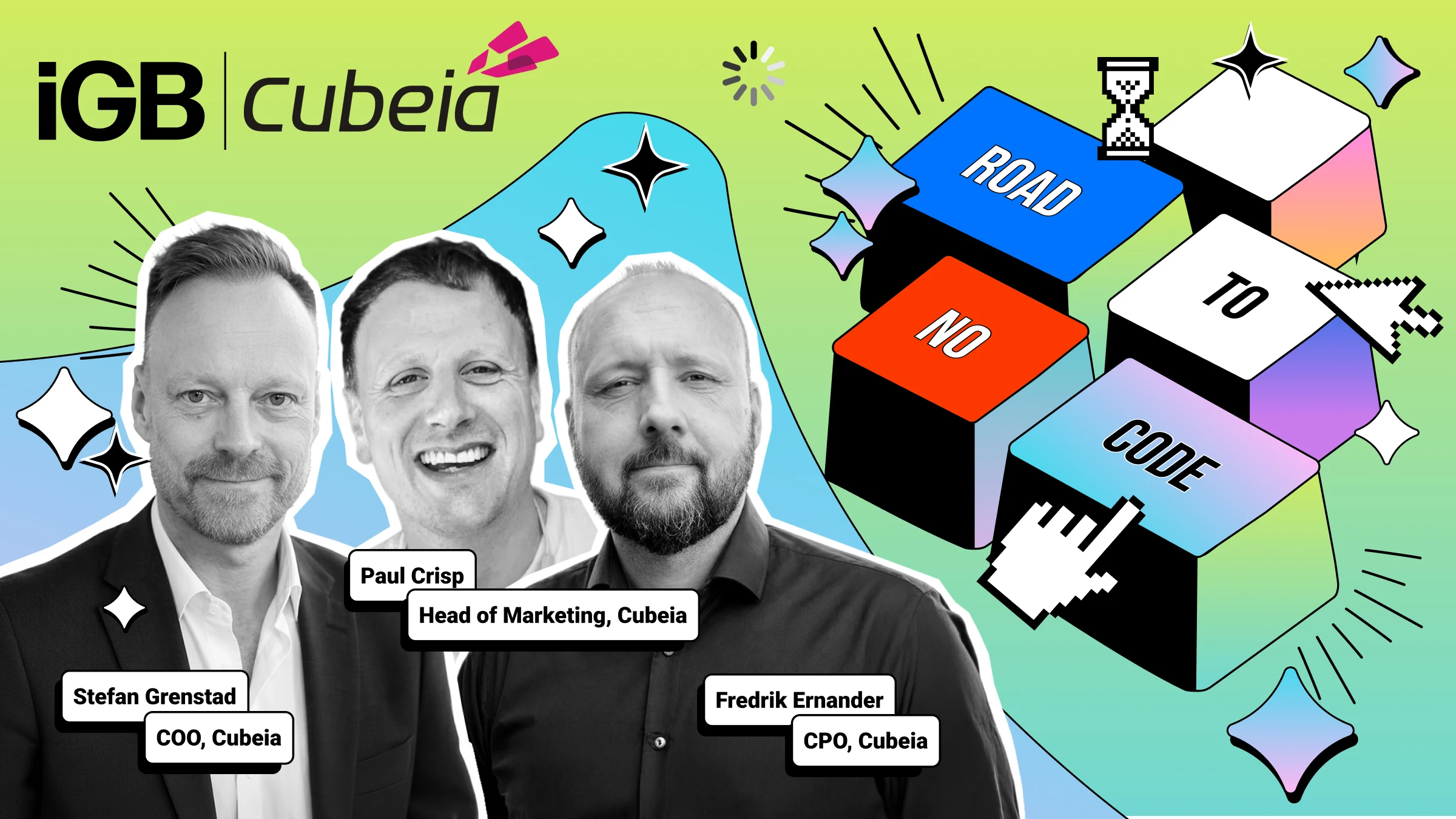
People are ultimately unpredictable, and how they react to change can impact how well new systems are implemented. In April iGaming platform developer Cubeia took the decision to adopt entirely AI-assisted code across its systems, with a focus on utilising Claude’s LLM to speed up the development and release of new updates for its client base.
By mid-July, Cubeia COO Stefan Grenstad tells iGB, the supplier’s front-end was 100% AI-driven, while its back-end systems were only slightly behind at 90%-95%. Sure enough, Grenstad’s estimation that the shift would speed up releases and allow it to push out more updates for clients than when it was reliant on human-written code, has come true.
Multi-tasking
However, one challenge the senior management team did not anticipate was exactly how much the transition would test the development team’s skillset. “What’s been very obvious here is that those of my developers that have a hard time with context switching are struggling because to increase the productivity, you need to be a multi-tasker,” Grenstad explains candidly.
“[When you multi-task you have several agents [running] at the same time, and they’re being done at different times, so in principle, you could start hundreds of them,” he continues. Notably, he believes there is a balance to be met. Because setting up an agent can take minutes, there is room for developers to potentially carry out lots of releases or tasks within a day. But multi-tasking is a crucial skill in ensuring all these can run in parallel and another developer will be available to review the AI-written code.
“There’s a sweet spot for how many parallel tasks [a developer] can actually orchestrate all at the same time. That becomes very important, and we need to find the perfect amount. That’s a side effect here that I didn’t see coming,” says Grenstad. As part of the transition, restructuring and additional training are needed to adapt to the updated processes.
“It’s a prioritisation skill, really, in terms of people knowing and understanding what to focus on versus what is less of a priority.”
Setting limits
The COO says the challenge has led to an open discussion internally on setting limits on how many tasks the team should carry out within a day. When asked whether there has been clear pushback within the team from any tech leads who are less enthused by the shift to a fully AI-written code, Grenstad says “of course”. In contrast some prior skeptics have taken to the new model extremely well.
“One of our senior guys that was one of the big skeptics has actually been using Claude as his sounding board. He has really adapted to AI-driven development in that way. So he’s one of the, you know, I think he’s one of the guys talking very positively about it.
“[When senior deveopers] start asking questions to AI the model can correct itself or make the solution even better, and that’s amazing.”
Others however, have concerns about losing control following the speed of releases increasing significantly. Prior to Cubeia’s road to AI-written code transition, it made between four and six releases per month, with an average of 50 tickets raised.
“We really increased the speed in May and June. In May we only had five releases, but we had 86 tickets. In June we had 10 releases and 96 tickets,” Gransted notes.
Notably, what’s really come to light in the last few weeks is the opportunity to reassess and restructure the team, to better integrate new processes and spread the use of AI across various teams. Ultimately, the intention is to have AI used across all functions.
Better integrating the QA function
One consideration Grenstad is making is how to better integrate the quality assurance function (QA) into Cubeia’s development cycle, particularly now that releases are happening at speed.
“[The QA function] is part of the development team, but there is kind of this handover in the middle. And that doesn’t work very well now that we have AI-driven development. When we try to start with AI-driven QA, they should go hand in hand at the same time.
“Under the new structure developers will be responsible for a task or release up until it gets into production, and the QA phase is part of that,” says Grenstad. QA, he believes, also needs to become a part of the planning process.
A significant part of the process is ensuring the teams involved have the necessary support required to help them through the transition, and he believes that largely, the developers do support the overall target of transitioning to a fully AI-assisted code. “My tech leads are doing a tremendous job with those that are struggling a bit, and you know supporting them, helping them,” notes Grenstad.
“I think everybody agrees now that this is the way we should be working. This is the future. I don’t think they are thinking this is the wrong way to go. I think they still are, as am I, skeptical about so many things like how do we ensure quality remains the same when we have such a high pace.”
在实施一场重大的运营变革时,公司不可避免地要经历一个适应新系统、新流程和员工新角色的过程。尽管在引入变革之前保持组织有序并进行充分的尽职调查有助于新系统快速整合,但对于高层团队而言,总存在未知因素。
人终究是不可预测的,他们对变革的反应会影响新系统的实施效果。四月份,iGaming平台开发商Cubeia决定在其所有系统中采用完全由AI辅助编写的代码,重点是利用Claude的大语言模型来加速为其客户群开发和发布新更新。
Cubeia首席运营官Stefan Grenstad告诉iGB,到七月中旬,该供应商的前端已实现100%由AI驱动,而后端系统仅略微落后,达到90%-95%。果然,Grenstad关于这一转变将加快发布速度、使其能够比依赖人工编写代码时为客户推送更多更新的预估已成为现实。
多任务处理
然而,高层管理团队没有预料到的一个挑战是,这一转型对开发团队技能组合的考验程度究竟有多大。“这里非常明显的一点是,我那些在上下文切换方面有困难的开发人员正在苦苦挣扎,因为要提高生产力,你需要成为一个多任务处理者,”Grenstad坦率地解释道。
“当你进行多任务处理时,你有多个代理同时运行,它们在不同时间完成,所以原则上,你可以启动数百个,”他继续说道。值得注意的是,他认为需要找到一种平衡。因为设置一个代理可能需要几分钟,开发人员有可能在一天内完成大量发布或任务。但多任务处理是一项关键技能,以确保所有这些都能并行运行,并且另一位开发人员可以随时审查AI编写的代码。
“一名开发人员实际能够同时协调的并行任务数量存在一个最佳平衡点。这一点变得非常重要,我们需要找到完美的数量。这是我未曾预料到的一个副作用,”Grenstad表示。作为转型的一部分,需要进行重组和额外培训以适应更新后的流程。
“这实际上是一种优先级排序技能,即让人们知道并理解应该关注什么,以及什么优先级较低。”
设定限制
这位首席运营官表示,这一挑战已在内部引发了关于设定团队每天应执行多少任务限制的公开讨论。当被问及团队内部是否有技术负责人对转向完全由AI编写代码不太热衷而明确表示反对时,Grenstad说“当然有”。相比之下,一些此前的怀疑者对新模式接受得非常好。
“我们的一位资深员工曾是最大的怀疑者之一,实际上一直在使用Claude作为他的参谋。他以这种方式真正适应了AI驱动的开发。所以他是其中之一,你知道,我认为他是对此非常积极评价的人之一。
“当资深开发人员开始向AI提问时,模型可以自我纠正或使解决方案变得更好,这太棒了。”
然而,其他人则担心随着发布速度大幅提升而失去控制。在Cubeia迈向AI编写代码的转型之前,它每月发布四到六次,平均提出50个工单。
“我们在五月和六月确实加快了速度。五月我们只有五次发布,但有86个工单。六月我们有10次发布和96个工单,”Grenstad指出。
值得注意的是,过去几周真正浮出水面的是重新评估和重组团队的机会,以更好地整合新流程并在各个团队中推广AI的使用。最终目标是在所有职能中应用AI。
更好地整合QA职能
Grenstad正在考虑的一个问题是如何更好地将质量保证职能(QA)整合到Cubeia的开发周期中,尤其是在发布速度加快的情况下。
“QA职能是开发团队的一部分,但中间存在某种交接。在AI驱动开发的情况下,这种方式运作得不太好。当我们尝试开始AI驱动的QA时,它们应该同时携手并进。
“在新结构下,开发人员将负责一项任务或发布,直到它进入生产环境,QA阶段是其中的一部分,”Grenstad说。他认为,QA也需要成为规划过程的一部分。
这一过程的一个重要部分是确保相关团队获得必要的支持,以帮助他们完成转型,他认为开发人员总体上确实支持向完全AI辅助代码转型的总体目标。“我的技术负责人在帮助那些有些困难的人方面做得非常出色,你知道,支持他们,帮助他们,”Grenstad指出。
“我认为现在每个人都同意这是我们应该采用的工作方式。这是未来。我不认为他们觉得这是错误的方向。我认为他们仍然和我一样,对很多事情持怀疑态度,比如在如此高的节奏下,我们如何确保质量保持一致。”