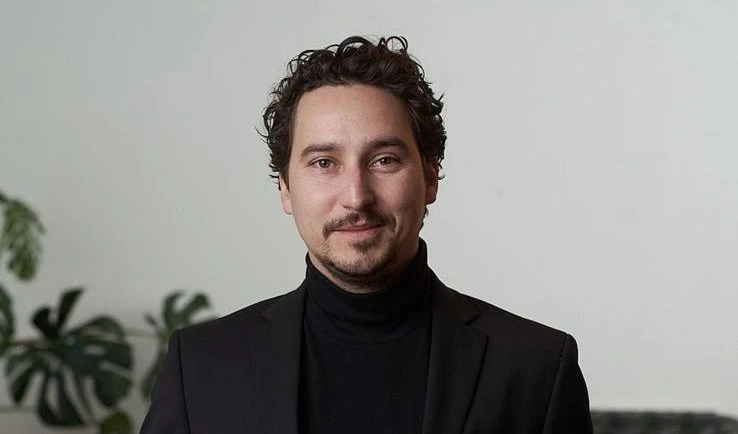
For the past five years, former Casinos Austria executive Niklas Sattler has been working on a bid to disrupt Austria’s calcified land-based casino sector.
Through his company, Alea Trust, he has been gathering top casino executives and industry experts, assembling a formidable fantasy football team of casino management. His aim is to take on the long-standing giant of Austrian gaming – his former employer, Casinos Austria – competing in the next tender for the land-based casino licences.
“This old-school image of the industry – I don’t like that,” Sattler tells iGB. “So I said, let’s refresh the industry and let’s jump inside the tender. Let’s do it ourselves.”
Since 2021, Sattler has convinced at least 40 former managers from Casinos Austria and other international casino brands to join him. Collectively, they have been laying the groundwork for a bid they hope will turn the land-based sector on its head.
“Casinos Austria has a track record as a company, but they’ve lost a lot of expertise over the years,” he says. “Our idea was to find the top experts in AML, responsible gambling, finance and casino operations and build a team that could compete at the very highest level.”
With Austria preparing its first major casino tender in years, Sattler is hopeful that the time could be right to give the greying industry a fresh, more socially forward-looking image. However, whether he will take the plunge and enter the fray remains an open question.
According to the Alea Trust founder, it all depends on how the proposed 13 casino licences will be structured and packaged. Will the market truly be open to new entrants, or will the current monopolist be heavily favoured in the process?
13 licences – but how many packages?
For several decades, Casinos Austria (CASAG) has towered over Austria’s casino industry. It is currently the sole operator of the country’s two packages of 15-year licences: six in urban centres (the Stadtpaket) and six in tourist hotspots (the Landpaket).
In a draft bill published in June, Austria’s coalition government set out its plans for sweeping gambling reforms. Among the headline changes was the opening of the online gaming market, ending the current monopoly.
Amid this earthquake, the questions hanging over land-based gaming barely caused a rumble. The Finance Ministry’s bill quietly set out plans for 13 casino licences, rather than the 12 currently operating. These 13 licences could be split into “objectively justified” packages.
The Finance Ministry tells iGB that location decisions would be based on an objective study taking into account population coverage, tourism potential, socioeconomic and demographic conditions and casino catchment areas. Any packages would also have to balance commercial viability and value while minimising competition to protect players and discourage aggressive marketing, it said.
“Applications are, of course, open to all market participants,” the ministry adds.
In Sattler’s view, offering individual concessions would be the fairest way to open the market. “Our idea is: let’s make 13 single licences,” he says. “That means you could apply for just one.”
However, he notes that Casinos Austria has been publicly calling for the retention of the packages. Instead of two packages of six, he predicts that one package of six and one of seven could later be up for tender. This would allow a second giant, such as Merkur, to enter the market, but would effectively shut out smaller players.
“We believe it’s quite unfair,” Sattler adds.
‘Cherry-picking’ in Austria land-based tender
For its part, Casinos Austria has advocated for the retention of the package system.
Speaking to iGB, the operator argued that packages were needed to ensure the broadest possible coverage of casinos, while considering economic conditions and tourism potential as well. A limited number of packages would also reduce competitive pressure that could otherwise encourage aggressive marketing and excessive gambling, it said.
“Only a carefully designed package solution can guarantee all of this,” Casinos Austria spokesperson Patrick Minar tells iGB. “Individual tenders would produce the opposite effect and encourage ‘cherry-picking’.”
A ‘stronger legal basis’ for packages
It remains unclear which route the government will ultimately take when it begins the next casino tender. But the fact that packages are now mentioned in the law may point to the direction of travel.
“The new provision provides a stronger legal basis than the previous regime because it expressly authorises the packaging of licences and specifies the factors the authority must consider,” explains Nicole Daniel, litigation & regulatory partner at the DLA Piper law firm in Vienna. “However, the fact that package formation is now regulated by statute does not eliminate the risk of favouring the incumbent.”
Depending on how the criteria are applied, “geographical diversity” and “economic potential” could become unnecessary burdens for new entrants.
“If, for example, you combine a highly profitable casino with a less attractive casino in a completely different part of Austria, that requires bidders to operate a more nationwide portfolio than they may have wanted,” she says. “That can place new entrants at a competitive disadvantage.”
Future Austria gambling authority ‘must be meticulous’
Arthur Stadler, a Vienna-based gaming lawyer and founder of Stadler Partner, says that although the direction is clear, the authority now has to deliver a meticulous, rigorously diligent tender.
“This won’t just be the blueprint for future tenders under the forthcoming new Austrian Gambling Authority,” he notes. “It also has to avoid repeating the embarrassing mistakes of the past.”
Still, he cautions that the draft law’s wording leaves considerable room for interpretation, not least when it comes to how licences are packaged.
While any decision must be “objectively justified”, Austria’s track record with casino tenders shows just how messy those “objective criteria” can get – and how easily they become a target for unsuccessful applicants looking to challenge the outcome.
“If I may make a bet for the future,” Stadler adds, “I’d bet the upcoming casino tenders get challenged from multiple sides and end up back at the Constitutional Court.”
Finance Ministry’s role as a shareholder questioned
Looking at the history of Austrian gaming, this prediction is not unfounded.
In the years following the revision of Austria’s gambling law in 2010, the Finance Ministry conducted a series of tenders. Although the legislation did not prescribe a package system, the ministry grouped the 12 existing casino licences into two sets of six: the Stadtpaket and Landpaket. Three newly created concessions were offered individually.
Casinos Austria retained both packages, while the three additional licences were awarded to Plaza 3 and Novomatic subsidiary Admiral. Those individual awards were subsequently annulled by the Federal Administrative Court, a decision upheld by Austria’s Supreme Administrative Court in 2016.
The court found that the assessment criteria and their weighting had not been disclosed to applicants before they prepared their bids, breaching requirements of transparency and equal treatment. It ruled that a new procedure was required, but the ministry never launched one, leaving the three additional concessions unawarded.
At the time, a state holding company owned a 33.2% stake in CASAG. Critics have since raised questions about the Finance Ministry’s dual role as concession-granting authority and shareholder.
Competition pushed back
This time around, the structure of the eventual tender is not the only potential obstacle facing new entrants. The draft also states that the six concessions for urban casinos, currently due to expire at the end of 2027, will be extended until 31 December 2028.
Following this year-long extension, the draft leaves room to push the deadline back even further. A new clause stipulates that an additional extension of “up to 24 months” is possible. This could apply due to pending legal proceedings or if no replacement has been found ahead of the licence expiry.
Casinos Austria argues that provisions allowing temporary continuation are not “fundamentally new”. Minar notes that the existing framework already contained a clause that allowed for extensions if a tender took longer than planned.
For legal expert Daniel, however, the one-year extension “appears to be more easily defensible” than the second, potentially longer delay. “In practice, that can extend incumbent operations until the end of 2030 without a fresh tender procedure,” she says. “I expect future legal challenges will focus primarily on the continuation mechanism rather than the one-year statutory extension.”
Giving back to the community
A third-generation casino professional, Sattler is hardly an industry outsider. Nevertheless, he believes that the regeneration of land-based gaming in Austria is long overdue. With the country becoming more diverse, he says casinos should reflect the values of the society around them.
“Our vision is much more about giving something back to players and to the community,” he says. “We take revenues, yes, obviously, but we have to do something for the regional community – investments or sponsorships – and work in the proper balance.”
The central question is whether more or less competition creates a more socially responsible structure. Casinos Austria says less competitive pressure encourages higher standards, while Sattler says more operators are better at keeping each other in check.
Ultimately, however, he also wants to see a new generation of operators being given a chance. “They are preparing a tender for operators that are not really competitive, and it...
过去五年来,前奥地利赌场(Casinos Austria)高管Niklas Sattler一直在推动一项旨在颠覆奥地利僵化的实体赌场行业的竞标计划。
通过他的公司Alea Trust,他一直在汇聚顶尖的赌场高管和行业专家,组建了一支堪称梦幻阵容的赌场管理团队。他的目标是挑战奥地利博彩业长期以来的巨头——他的前雇主奥地利赌场——参与下一轮实体赌场牌照的招标竞争。
“这个行业老派的形象——我不喜欢,”Sattler对iGB表示。“所以我说,让我们刷新这个行业,让我们投身招标。让我们自己来做。”
自2021年以来,Sattler已说服至少40位来自奥地利赌场及其他国际赌场品牌的前管理人员加入他的团队。他们一直在共同为一项竞标奠定基础,希望能彻底改变实体赌场行业的格局。
“奥地利赌场作为一家公司有着辉煌的历史,但多年来他们流失了大量专业人才,”他说。“我们的想法是找到反洗钱、负责任博彩、财务和赌场运营领域的顶尖专家,组建一支能够在最高水平上竞争的团队。”
随着奥地利正在筹备多年来首次大型赌场招标,Sattler希望时机可能已经成熟,可以为这个日渐老化的行业注入新鲜、更具社会前瞻性的形象。然而,他是否会真正投身其中参与竞争,仍是一个悬而未决的问题。
据这位Alea Trust创始人表示,这一切取决于拟议中的13张赌场牌照将如何构建和打包。市场是否真正对新进入者开放,还是现任垄断者将在过程中获得严重偏袒?
13张牌照——但分成多少个打包组合?
几十年来,奥地利赌场(CASAG)一直高踞奥地利赌场行业之巅。它目前是该国两个15年牌照包的唯一运营商:六个位于城市中心(Stadtpaket),六个位于旅游热点地区(Landpaket)。
在6月发布的一份草案法案中,奥地利联合政府公布了全面的博彩改革计划。其中最引人注目的变化是开放在线博彩市场,终结目前的垄断局面。
在这场大地震中,悬在实体博彩头上的问题几乎未能激起波澜。财政部的法案悄然提出了13张赌场牌照的计划,而非目前运营的12张。这13张牌照可以被拆分为“有客观合理依据的”打包组合。
财政部对iGB表示,选址决定将基于一项客观研究,综合考虑人口覆盖、旅游潜力、社会经济和人口条件以及赌场辐射区域。财政部还表示,任何打包组合都必须平衡商业可行性和价值,同时尽量减少竞争以保护玩家并遏制激进的营销行为。
“申请当然对所有市场参与者开放,”该部补充道。
在Sattler看来,提供单独特许经营权是开放市场的最公平方式。“我们的想法是:让我们做成13张单独牌照,”他说。“这意味着你可以只申请一张。”
然而,他指出奥地利赌场一直在公开呼吁保留打包组合制度。他预测,最终可能会将一个六张牌照的组合和一个七张牌照的组合拿出来招标,而非两个各六张的组合。这将允许像Merkur这样的第二个巨头进入市场,但实际上会将较小的参与者拒之门外。
“我们认为这相当不公平,”Sattler补充道。
奥地利实体赌场招标中的“挑肥拣瘦”
就奥地利赌场而言,它一直主张保留打包组合制度。
在接受iGB采访时,该运营商辩称,打包组合是确保赌场尽可能广泛覆盖所必需的,同时也要考虑经济条件和旅游潜力。它表示,有限的打包组合数量还能减少竞争压力,否则可能助长激进营销和过度赌博。
“只有精心设计的打包组合方案才能保证这一切,”奥地利赌场发言人Patrick Minar对iGB表示。“单独招标会产生相反的效果,助长‘挑肥拣瘦’。”
打包组合获得“更强法律依据”
目前尚不清楚政府在启动下一轮赌场招标时最终会采取哪条路线。但打包组合如今被写入法律这一事实,可能指向了政策方向。
“新条款比之前的制度提供了更强的法律依据,因为它明确授权对牌照进行打包,并具体规定了主管机关必须考虑的因素,”维也纳DLA Piper律师事务所诉讼与监管合伙人Nicole Daniel解释道。“然而,打包组合的形成如今由法规加以规范,这一事实并不能消除偏袒现有运营者的风险。”
取决于标准如何适用,“地理多样性”和“经济潜力”可能成为新进入者不必要的负担。
“例如,如果你将一家高盈利赌场与奥地利完全不同地区的一家吸引力较低的赌场捆绑在一起,这就要求投标者运营一个比他们原本意愿更全国性的投资组合,”她说。“这可能使新进入者处于竞争劣势。”
未来的奥地利博彩监管机构“必须一丝不苟”
维也纳博彩律师、Stadler Partner创始人Arthur Stadler表示,尽管方向已经明确,但监管机构现在必须进行一次细致入微、严格勤勉的招标。
“这不仅仅是未来奥地利新博彩监管机构进行招标的蓝图,”他指出。“它还必须避免重蹈过去令人尴尬的错误。”
不过,他警告说,草案法律的措辞留下了相当大的解释空间,尤其是在牌照如何打包方面。
虽然任何决定都必须“有客观合理依据”,但奥地利在赌场招标方面的过往记录表明,这些“客观标准”可以变得多么混乱——以及它们多么容易成为未中标申请者挑战结果的目标。
“如果我可以对未来的事打个赌,”Stadler补充道,“我赌即将到来的赌场招标会遭到多方挑战,最终回到宪法法院。”
财政部作为股东的角色受到质疑
回顾奥地利博彩业的历史,这一预测并非毫无根据。
在2010年奥地利博彩法修订后的几年里,财政部进行了一系列招标。尽管立法并未规定打包组合制度,但财政部将现有的12张赌场牌照分为两组各六张:Stadtpaket和Landpaket。三张新设立的特许经营权则单独提供。
奥地利赌场保留了这两个打包组合,而三张额外牌照被授予了Plaza 3和Novomatic子公司Admiral。这些单独授予随后被联邦行政法院撤销,该裁决于2016年被奥地利最高行政法院维持。
法院认定,评估标准及其权重在申请人准备投标之前未向其披露,违反了透明度和平等待遇的要求。法院裁定需要进行新的程序,但财政部从未启动,导致这三张额外特许经营权一直未予授予。
当时,一家国有控股公司持有CASAG 33.2%的股份。此后,批评者一直质疑财政部作为特许经营权授予机构和股东的双重角色。
竞争被推迟
这一次,最终招标的结构并非新进入者面临的唯一潜在障碍。草案还规定,目前将于2027年底到期的六张城市赌场特许经营权将延长至2028年12月31日。
在这一年的延期之后,草案为进一步推迟截止日期留下了空间。一项新条款规定,“最多24个月”的额外延期是可能的。这可能适用于未决法律程序,或者在牌照到期前未找到替代方案的情况。
奥地利赌场辩称,允许临时延续的条款并非“根本性的新规定”。Minar指出,现有框架已经包含了一项条款,允许在招标耗时超出计划时进行延期。
然而,对于法律专家Daniel来说,一年的延期“似乎比第二次可能更长的延迟更容易辩护”。“在实践中,这可以将现有运营者的运营延长至2030年底,而无需进行新的招标程序,”她说。“我预计未来的法律挑战将主要集中在延续机制上,而非一年的法定延期。”
回馈社会
作为第三代赌场专业人士,Sattler绝非行业门外汉。尽管如此,他认为奥地利实体博彩业的革新早已刻不容缓。随着国家变得更加多元化,他说赌场应该反映周围社会的价值观。
“我们的愿景更多是关于回馈玩家和社区,”他说。“我们当然要获取收入,但我们必须为区域社区做些事情——投资或赞助——并在适当的平衡中运作。”
核心问题是,更多还是更少的竞争能创造更具社会责任感的架构。奥地利赌场表示,较小的竞争压力有助于提高标准,而Sattler则认为更多运营商更有利于相互制衡。
然而,归根结底,他也希望看到新一代运营商获得机会。“他们正在为那些并非真正具有竞争力的运营商准备招标,而它……