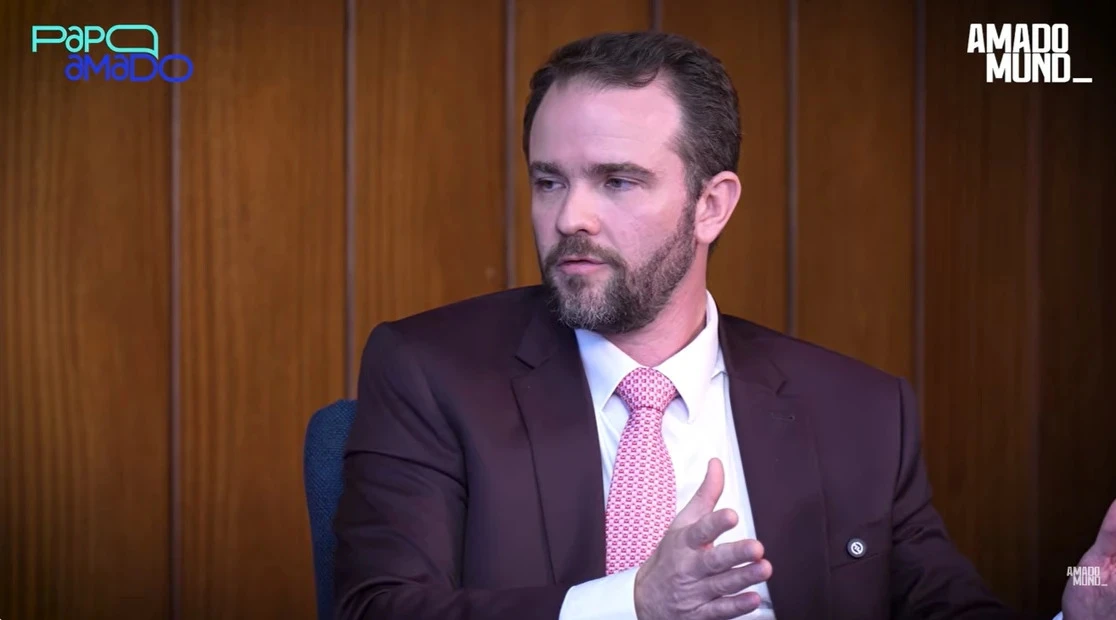
Brazil Finance Minister Dario Durigan stated the country does not depend on betting revenue to balance public accounts.
He said the regulation was well established and not with the intention of raising revenue.
“Tax collection is part of the economic game and all sectors contribute,” Durigan said. “The same happens with betting.”
He argued the sector should be treated with the same rigour currently applied to cigarettes.
In an interview with Guilherme Amado’s column in Amado Mundo, Durigan said the government of Brazil and President Luiz Inácio Lula da Silva had fulfilled what was defined in the law that established sports betting.
“The legislation mandated the regulation of the sector, which did not happen in the previous administration,” he explained. “We came into government with the sector operating for almost five years.
“We saw that they had entered football and advertising, and they have political and economic weight. Understanding that Congress would not prohibit the activity, we decided to put the brakes on and establish the rules.
“It’s not that I want to collect taxes because I need the money. I want to collect taxes for the sake of fairness: if a company sells cars, it pays taxes; if it sells drinks, it pays taxes. If it’s authorised to operate, it has to pay.”
In the interview, the minister mentioned the tax changes proposed by the Ministry of Finance, and more recently, the ban on beneficiaries of social welfare programmes from gambling.
Lula’s discomfort about betting in Brazil
Durigan recalled that Lula has already made clear his discomfort with the cost and quality of life for people.
“Therefore, we have been having this debate,” he added. “I have been to Congress, the Supreme Federal Court, and the Attorney General’s office to talk about the impact of betting on the lives of Brazilians.
“We have made progress, such as increasing the direct tax to 15% and including the activity in the Selective Tax. Those benefiting from social programmes and those who joined the Desenrola programme were also prohibited from betting.”
He also pointed to the self-exclusion mechanism adopted by the government.
“The debate about prohibition will remain open in the country for the next few years,” he said. “It will be an institutional debate between the Supreme Court, Congress and the executive branch.
Durigan did not indicate that the government would prohibit the activity.
巴西财政部长达里奥·杜里甘表示,该国不依赖博彩收入来平衡公共账户。
他表示,监管制度已经完善建立,并非以增加收入为目的。
“税收是经济博弈的一部分,所有行业都有贡献,”杜里甘说。“博彩也是如此。”
他主张,该行业应当受到目前适用于烟草的同等严格监管。
在接受Guilherme Amado在Amado Mundo的专栏采访时,杜里甘表示,巴西政府和总统路易斯·伊纳西奥·卢拉·达席尔瓦已经履行了确立体育博彩的法律所规定的内容。
“该立法要求对该行业进行监管,但上一届政府并未这样做,”他解释道。“我们上台时,该行业已经运营了近五年。
“我们看到他们已经涉足足球和广告领域,并且具有政治和经济影响力。认识到国会不会禁止该活动,我们决定踩下刹车并制定规则。
“并不是因为我需要钱才想征税。我征税是为了公平:如果一家公司卖汽车,它要交税;如果它卖饮料,它要交税。如果它被授权运营,它就必须交税。”
在采访中,这位部长提到了财政部提出的税收改革,以及最近禁止社会福利项目受益人参与博彩的规定。
卢拉对巴西博彩的不安
杜里甘回顾说,卢拉已经明确表达了他对民众生活成本和生活质量的不安。
“因此,我们一直在进行这场辩论,”他补充道。“我去过国会、联邦最高法院和总检察长办公室,讨论博彩对巴西人生活的影响。
“我们取得了进展,例如将直接税率提高到15%,并将该活动纳入选择性税。社会福利项目的受益者和加入Desenrola项目的人也被禁止参与博彩。”
他还指出了政府采用的自我排除机制。
“关于禁令的辩论将在未来几年继续在该国展开,”他说。“这将是一场最高法院、国会和行政部门之间的制度性辩论。
杜里甘并未表示政府会禁止该活动。