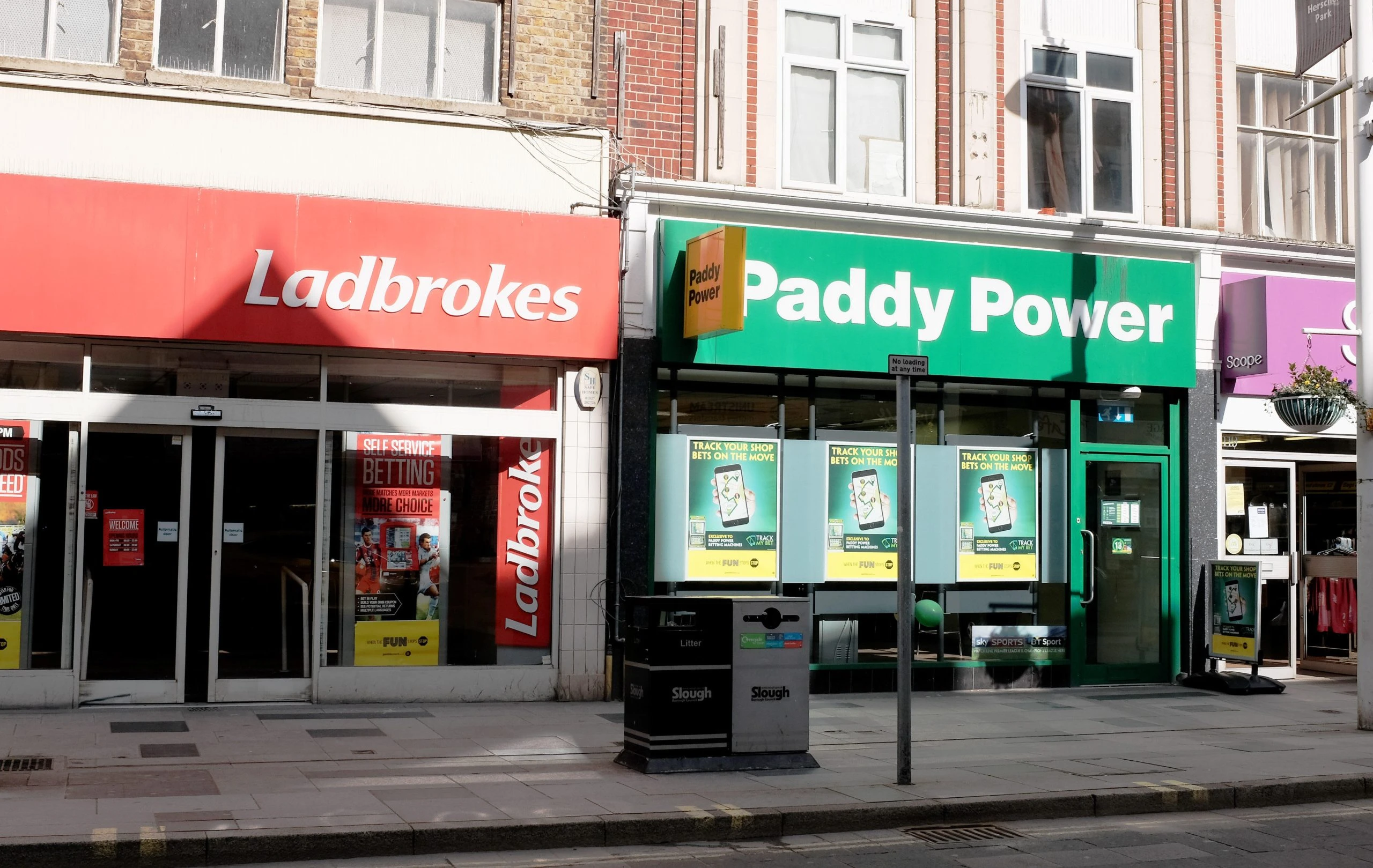
It’s no surprise that the gambling industry reacted angrily when Prime Minister Andy Burnham placed betting shops alongside vape shops and rogue operators in his diagnosis of Britain’s failing high streets.
Burnham’s government intends to remove the “aim to permit” principle from the Gambling Act 2005, giving local authorities greater freedom to reject applications for gambling premises. New adult gaming centres will also require planning permission.
But it was the language surrounding the announcement that caused the greatest offence. Burnham claimed betting and vape shops had replaced the shops, services and community spaces people wanted, while the policy was presented as a means of reining in “dodgy businesses”.
For the bookmakers, the obvious objection is that the story being told – some might say fabricated – bears little resemblance to the facts on the ground. Britain has fewer than 5,900 betting shops, compared with nearly 9,000 in 2015. Rather than spreading unchecked, the retail sector has been contracting for more than a decade.
Dodgy businesses?
JenningsBet chief executive Greg Knight described the comparison as an insult to both employees and customers. “What sort of ‘dodgy’ business provides employment for 40,000 people, finances the entire British horseracing industry… and pays billions in taxes and rates?” he asked.
His own business neatly illustrates the disparity between the rhetoric and the reality. JenningsBet has opened four shops this year but closed three, producing organic growth of precisely one outlet. Most of its expansion has come through acquisition.
Knight believes new openings could “grind to a halt” if councils receive greater discretion, although applications are already down to a trickle. He also suspects politicians may be conflating betting shops and AGCs, which remain different businesses despite being bundled together in the government’s announcement.
The AGC sector has mounted a similar defence. Bacta communications director Alistair Gair pointed out that venue numbers fell from 1,610 in 2015 to 1,502 last year. “This is a sector in decline, not one taking over Britain’s high streets,” he said.
Gair’s argument goes beyond the statistics. AGCs occupy units that may otherwise stand empty, provide employment and offer supervised, low-stake entertainment in regulated, alcohol-free environments. Restricting licensed premises, he warned, risks pushing customers towards illegal alternatives where none of those protections exists.
The butcher, the baker, the candlestick maker
If high streets are being hollowed out, closing or preventing the occupation of commercial units will not necessarily refill them with banks, butchers and community centres. Councils can only choose among businesses willing and financially able to operate there.
Christopher Snowdon of the Institute of Economic Affairs argued in a substack posting that Burnham has confused the cause of high-street decline with one of its effects. Betting and gaming businesses have not displaced a thriving retail economy; they have become more visible because falling demand and rents allowed them to move into units abandoned by traditional retailers.
“The idea that the high street can be revived by killing off the few remaining businesses that are able to operate on it is just silly,” he wrote.
The deeper change, Snowdon suggests, is structural. Supermarkets and online shopping have permanently reduced demand for banks, bookshops, newsagents and electronics retailers. The surviving high street will increasingly consist of services that must be consumed in person, including pubs, cafés, barbers and repair shops, with surplus premises converted into housing.
Restricting legitimate operators will not reverse that transformation, while creating new laws to address criminal activity in some vape shops and barbers risks substituting regulation for enforcement of existing laws.
Rank chief executive Richard Harris offered a defence of the industry’s place in society. Speaking during the company’s year-end results call last week, he said Rank was proud of venues it considers “community assets”, providing gambling supervision and safe entertainment.
“We try and look after our customers really, really well,” he told the analysts. “That is the game that we are in. We will continue to offer them the best entertainment, the best fun that we possibly can.”
Losing the narrative
Some want the industry to be more on the front foot. Patrick Jay, formerly of William Hill and now a consultant, argues that the sector has suffered from a leadership void and been repeatedly outmanoeuvred by opponents who established the dominant public narrative.
“What we have fundamentally misunderstood is how to fight back,” he tells iGB. “The goalposts have moved. We needed to have a social media paid response team that deals with all the health lobby nonsense on an hourly basis, so that these narratives get immediately challenged. Because at the moment, a guy at the SMF says stuff and there is no real pushback.”
Statistics alone will not settle an argument about how high streets feel to the people who use them. But the sector needs to demonstrate its local value consistently, not merely when threatened.
The challenges faced by retail betting now land in the in-tray of Vicki Foxcroft, the newly appointed minister responsible for gambling. She inherits an industry convinced it has been maligned, a prime minister who has already chosen his language and a policy whose simple announcement disguises some complicated legislative questions.
Not many would relish the task ahead. As the old joke about a tourist asking for directions in Ireland has it, “if I were you, I wouldn’t start from here.”

Scott Longley has been a journalist since the early noughties covering personal finance, sport and gambling, and is the founder of Earnings+More. Previously Scott worked for a number of publications including Investment Week, Bloomberg Money, Football First, eGaming Review and Gambling Compliance.
当英国首相安迪·伯纳姆(Andy Burnham)在诊断英国高街衰败时,将博彩店与电子烟店及不良运营商相提并论,博彩行业对此反应愤怒,这并不令人意外。
伯纳姆政府打算废除2005年《博彩法》中的“意图许可”原则,赋予地方政府更大的自由来拒绝博彩场所的申请。新的成人游戏中心也将需要规划许可。
但真正引发最大不满的是围绕该公告的措辞。伯纳姆声称博彩店和电子烟店取代了人们想要的商店、服务和社区空间,而该政策被描述为遏制“不良企业”的手段。
对于博彩公司而言,显而易见的反对意见是,所讲述的故事——有些人可能会说是捏造的——与实际情况几乎不符。英国目前拥有不到5,900家博彩店,而2015年时接近9,000家。实体博彩行业并非在无节制地扩张,而是已经持续萎缩了十多年。
不良企业?
JenningsBet首席执行官格雷格·奈特(Greg Knight)将这种比较描述为对员工和客户的侮辱。“什么样的‘不良’企业能为4万人提供就业,为整个英国赛马产业提供资金……并缴纳数十亿的税款和商业税?”他问道。
他自己的企业恰好说明了言辞与现实之间的差距。JenningsBet今年开设了四家门店,但关闭了三家,净增长恰好只有一家门店。其大部分扩张来自收购。
奈特认为,如果议会获得更大的自由裁量权,新开门店可能会“陷入停滞”,尽管目前申请数量已经寥寥无几。他还怀疑政客们可能将博彩店和成人游戏中心混为一谈,尽管在政府的公告中它们被捆绑在一起,但二者仍然是不同的业务。
成人游戏中心行业也提出了类似的辩护。Bacta通讯总监阿利斯泰尔·盖尔(Alistair Gair)指出,场所数量从2015年的1,610家下降到去年的1,502家。“这是一个正在衰退的行业,而不是一个正在占领英国高街的行业,”他说。
盖尔的论点不止于统计数据。成人游戏中心占据了原本可能空置的商铺,提供就业机会,并在受监管的无酒精环境中提供有监督的低注额娱乐。他警告说,限制持牌场所可能会将顾客推向非法替代场所,而在那里这些保护措施都不存在。
屠夫、面包师和烛台匠
如果高街正在被掏空,关闭或阻止商业店铺的入驻并不一定能用银行、肉铺和社区中心来填补。议会只能在那些愿意且有能力在那里经营的商家中进行选择。
经济事务研究所的克里斯托弗·斯诺登(Christopher Snowdon)在Substack的一篇文章中认为,伯纳姆将高街衰败的原因与其结果之一混为一谈了。博彩和游戏企业并没有取代繁荣的零售经济;它们之所以更加显眼,是因为需求下降和租金下跌使它们得以搬入传统零售商放弃的店铺。
“认为可以通过消灭少数仍能在高街上经营的企业来复兴高街的想法,简直是愚蠢的,”他写道。
斯诺登认为,更深层的变化是结构性的。超市和网上购物已经永久性地降低了对银行、书店、报刊亭和电子产品零售商的需求。幸存的高街将越来越多地由必须亲自消费的服务组成,包括酒吧、咖啡馆、理发店和修理店,而多余的场所将被改造成住房。
限制合法运营商不会逆转这一转变,而制定新法律来解决一些电子烟店和理发店中的犯罪活动,则有可能以监管取代对现有法律的执行。
Rank首席执行官理查德·哈里斯(Richard Harris)为该行业在社会中的地位进行了辩护。在上周公司年终业绩电话会议上发言时,他表示Rank为其视为“社区资产”的场所感到自豪,这些场所提供博彩监督和安全娱乐。
“我们努力非常、非常好地照顾我们的客户,”他告诉分析师。“这就是我们所从事的行业。我们将继续为他们提供最好的娱乐,尽可能最好的乐趣。”
失去话语权
一些人希望该行业能更加主动出击。曾任职于William Hill、现为顾问的帕特里克·杰伊(Patrick Jay)认为,该行业遭受了领导力真空之苦,并一再被那些建立了主导公共叙事的对手所击败。
“我们从根本上误解了如何反击,”他告诉iGB。“球门已经移动了。我们需要一个社交媒体付费回应团队,每小时处理所有健康游说团体的无稽之谈,以便这些叙事能立即受到质疑。因为目前,SMF的某个人说了些什么,却没有真正的反驳。”
仅靠统计数据无法解决关于高街对使用者而言感受如何的争论。但该行业需要持续展示其本地价值,而不仅仅是在受到威胁时才这样做。
实体博彩如今面临的挑战落在了新任博彩事务大臣维基·福克斯克罗夫特(Vicki Foxcroft)的案头。她继承的是一个确信自己遭到诋毁的行业、一位已经选定了措辞的首相,以及一项仅凭简单公告就掩盖了一些复杂立法问题的政策。
没有多少人会羡慕面前的任务。正如那个关于游客在爱尔兰问路的古老笑话所说,“如果我是你,我不会从这里出发。”
斯科特·朗利(Scott Longley)自本世纪初以来一直担任记者,报道个人理财、体育和博彩领域,是Earnings+More的创始人。此前,斯科特曾供职于多家出版物,包括Investment Week、Bloomberg Money、Football First、eGaming Review和Gambling Compliance。