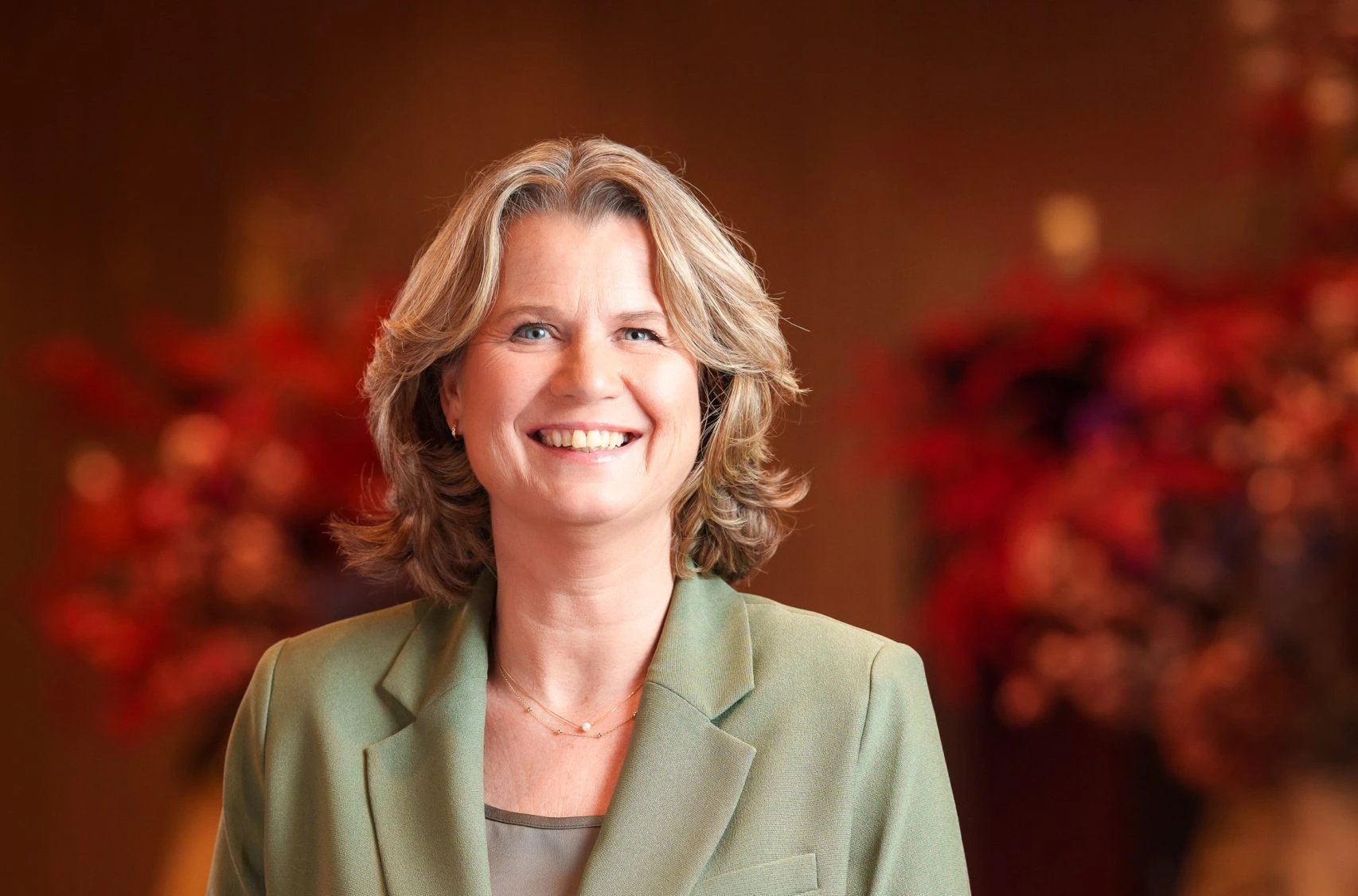
One of Europe’s best-known casino operators, Holland Casino runs 13 locations in the country, offering a mix of table games and slots. Amsterdam carries two casinos, while the rest are scattered around, with a slight emphasis in the south, near the Netherlands’ border with Germany.
The operator has no international locations. Well, it’s a state monopoly, after all. Holland Casino was also one of the first operators to launch online when the market legalised in 2021, with Petra de Ruiter joining the company as CEO the following year.
Petra’s journey to the role started in a hotel management school where she learned the ropes of hospitality, followed by a job at Transavia Airlines, a subsidiary of renowned Dutch operator KLM. This led to 24 years in the aviation industry, in a host of different roles: sales, marketing, operations – all aspects of the business that would later become useful in the casino industry.
A new challenge
By the time Covid came around in 2020, Petra felt she had done enough in aviation and went looking for her next role. As she told me, “Holland Casino popped up and I am somebody who by their nature looks at similarities instead of differences.
“What I saw is, Holland Casino is a company with 4,000 people working in hospitality, in a strongly regulated market where you have to balance between offering entertainment and a nice evening out with hospitality, and the risk attached to that – and there you see the similarities with the airline industry.
She adds: “For example, Transavia also had 4,000 people, cabin crew, cockpit, and more, all very regulated, labour union intensive, people being busy with what can we offer to the guests – but at the same time they have to know their rules and their regulations very well, because it’s important when there’s risk attached.
“I had never been a CEO before so I came to it with a kind of Pippi Longstocking attitude – ‘I’ve never done it, but I’m sure I can do it!’”
Cross-border custom
We mentioned that southern border because German players apparently enjoy the Holland Casino offering too. “German visitors are really interested because we have a different offer from most of the German casinos,” Petra explains.
“If you look at our land-based casinos, it’s table games, slots, in some cases bingo, and on some evenings, poker. But there are also restaurants, entertainment. It’s an afternoon or evening out. And as I understand from our German guests, it’s a more entertaining evening or afternoon than in some German casinos.”
The company’s offering in the south does not differ markedly from elsewhere in the country, though – the base offering remains the same: “We always have slots, we always have table games like roulette and blackjack, and we always have at least one restaurant, sometimes two.”
Casinos in Holland are not limited to a maximum or set number of slots, either – but Petra says the operator is careful not to overwhelm players with too much choice.
The Next Zone innovation
Variations in the estate seem to largely be down to the size of the property rather than assumptions about customers. In some of the larger casinos, players can enjoy Interblock’s brilliant Stadium setup, where slots and table games combine with a live presenter for an energetic, effervescent casino floor.
Holland Casino calls this Next Zone, and as Petra elaborates: “It’s an innovation we made a few years ago to see how we can develop a casino product because I think in the industry, we are very well known for what we have, but how do you innovate?”
Like most operators, slots make up the bulk of Holland Casino’s income, but it’s worth remembering that Holland Casino has a monopoly on table games, poker and bingo. “I would say those are also our hero products that make us attractive because in the Netherlands we are the only one offering land based live table games,” says Petra.
“Maybe they’re not so dominant in the results, but it is dominant in our identity. But figures-wise, slots are bigger than table games.”
Petra’s experience in aviation and education taught her that people are important – losing the human interaction on the casino floor would be a bad idea. Sure, not all customers want to talk, but the success of the Next Zone points to players seeing Holland Casino as a sociable, lively experience rather than a solitary one.
A healthy legal market in the Netherlands
The Netherlands has been the subject of much industry conversation, particularly the online side of the business. Petra emphasises the importance of a ‘healthy legal gambling market’ to help the sector thrive. “We see taxes going up, we see regulations going up. You see your guests changing what they want. We have to make sure that we have a good legal offer because if we don’t have that, we also know that people will find their way to illegal means.”
Holland Casino celebrates 50 years this year since the Dutch government founded it. Petra says it was very important at the time to provide that activity to local people. “So they decided to found Holland Casino. At that time, they also thought it might be interesting for tourists. That aspect is really gone, we’re really focused on the local market now. But 50 years later, it’s still very relevant to have a good, healthy legal industry.”
Tax hikes forces strategic reshuffle, but consumers wouldn’t know it
Is the monopoly safe, is it set in the law that it will operate forevermore? No, it’s under constant evaluation, Petra explains: “The Dutch state, represented by the Ministry of Finance, is our shareholder and they evaluate every seven years, not only us as Holland Casino, but all state-owned companies.”
One of the operator’s most significant challenges is the increase in gambling tax enforced over recent years. Petra has been particularly vocal about this and the company’s profitability has taken a reasonable hit, since the first tax increase to 34.2% of GGR came into effect on 1 January 2025.
Holland Casino now pays 37.8% of GGR to the state, as per the additional increase in 2026, but with labour tax on top the business pays around 52% before they can look at their base running costs. It is not a small burden by any stretch of the imagination, so it is heartening to see the business doing well despite the tightening tax burden.
Mitigation amid tax and regulatory tightening
With such a significant rise in tax, you would forgive the company for cutting wherever possible, but Petra says they have made it work by maximising efficiency, restructuring, and maintaining their offering so the customer doesn’t notice that anything has changed.
“We feel that people are always interested in gambling and that we are the party who should offer that in a safe way. [Holland Casino] has been careful to maintain that, but of course our costs rose very quickly, so we restructured at our head office. We have also been looking at innovations in offerings, which we are currently also testing, including a further development of the Next Zone. We’ve also introduced the double zero in roulette, which we didn’t have previously in the Netherlands,” the CEO says.
“Obviously, in the gaming industry we don’t have a price tag on our product where you can just change the RTP (return-to-player) and your problem is solved, it doesn’t work like that. Especially not if you take responsible gaming seriously.”
No cross-selling between channels
Speaking of which, in Holland the casinos must have two databases, one for online players, one for land-based, and keep them very separate – except for when it comes to responsible gambling (RG). A casino can’t use its online offering to promote the land-based side to players, and vice-versa – but the data can all be used together to make sure customers are safe from harm whenever they play with the same operator, online or otherwise.
Being a state-owned monopoly is beneficial for RG purposes. You don’t have an employer or shareholders expecting a positive quarterly earnings report four times a year, and as long as the business is self-supporting it can continue to make the best choices for player health and relationships. As Petra defines it: “It’s about a healthy long-term relationship.”
Holland Casino has a responsible gambling board, which includes scientists, experts with lived experience and their own RG executives. They meet with the board every few months to talk over current processes, and the board challenges the operator’s ideas and implementations, pushing them to do better.
“They challenge us both from an academic side and a more practical side. We try to develop our rules as we go along but you have to prove every single day that you’re doing all that you need to do on responsible gaming,” Petra notes.
iGaming, the elephant in the room
The Netherlands online gambling market has been the subject of many column inches and much speculation thanks to regulation that has been largely described as heavy-handed and perhaps a little short-sighted – even by the country’s own regulator.
The triumvirate of Netherlands, Germany and Sweden is often held up as an example of how not to regulate, with all three countries haemorrhaging players to waiting illegal operators. So what is public sentiment like towards operators? “My feeling is that if you look at public sentiment, they don’t see really the difference between online and land-based,” says Petra. “If you look into what they’re saying, they’re primarily talking online. But for the general public, there is no difference [between the channels] in that respect.”
She believes the sentiment towards gambling among the Dutch public is comparable to the UK, Finland, Germany, France. “So, very tense,” she says.
Holland Casino has slipped down the ranks
However the sentiment towards the Holland Casino brand has remained quite positive, while more generally the sentiment towards gambling is very critical.
“People look primarily at the instances where things go wrong for players; of course, every single one of those is one too many. But they don’t tend to look at the large number of people enjoying gambling.”
Holland Casino was one of the...
作为欧洲最知名的赌场运营商之一,Holland Casino在该国经营着13家门店,提供桌面游戏和老虎机的混合娱乐体验。阿姆斯特丹拥有两家赌场,其余则分散在各地,略微偏重于南部靠近荷兰与德国边境的地区。
该运营商没有国际门店。毕竟,它是一家国有垄断企业。Holland Casino也是最早在2021年市场合法化时推出在线业务的运营商之一,Petra de Ruiter于次年加入公司担任首席执行官。
Petra走上这一职位的旅程始于酒店管理学院,在那里她学习了酒店管理的基本知识,随后在荷兰著名运营商KLM旗下的Transavia航空公司工作。这开启了她在航空业24年的职业生涯,担任过多种不同职务:销售、营销、运营——这些业务领域的方方面面后来在赌场行业都派上了用场。
新的挑战
到2020年新冠疫情来袭时,Petra觉得自己在航空业已经做得够多了,于是开始寻找下一个职位。正如她告诉我的那样:“Holland Casino出现了,而我这个人天生倾向于看相似之处而非差异。
“我看到的是,Holland Casino是一家拥有4,000名从事酒店服务员工的公司的,在一个受到严格监管的市场中,你必须在提供娱乐和愉快的酒店式夜晚体验与随之而来的风险之间取得平衡——在这里你可以看到与航空业的相似之处。
她补充道:“例如,Transavia也有4,000名员工,包括客舱乘务员、驾驶舱人员等,全都受到严格监管,工会力量强大,人们忙于思考我们能向乘客提供什么——但与此同时,他们必须非常了解自己的规则和法规,因为当涉及风险时,这一点至关重要。
“我以前从未担任过首席执行官,所以我带着一种长袜子皮皮式的态度来到这里——‘我从没做过,但我相信我能做到!’”
跨境客源
我们提到南部边境,是因为德国玩家显然也很喜欢Holland Casino的产品。“德国访客非常感兴趣,因为我们的产品与大多数德国赌场不同,”Petra解释道。
“如果你看我们的实体赌场,有桌面游戏、老虎机,某些情况下还有宾果,某些晚上还有扑克。但也有餐厅和娱乐表演。这是一个下午或晚上的外出消遣。据我从德国客人那里了解到的,这比一些德国赌场提供的是更具娱乐性的夜晚或下午。”
不过,该公司在南部的产品与全国其他地方并没有显著差异——基础产品保持不变:“我们始终有老虎机,始终有轮盘和二十一点等桌面游戏,始终至少有一家餐厅,有时有两家。”
荷兰的赌场也没有老虎机数量上限或固定数量的限制——但Petra表示,运营商很注意不要让玩家因选择过多而不堪重负。
Next Zone创新
各门店之间的差异似乎主要取决于场地规模,而非对客户的假设。在一些较大的赌场中,玩家可以享受Interblock出色的Stadium布局,老虎机和桌面游戏与真人主持人相结合,营造出充满活力、激情四射的赌场氛围。
Holland Casino称之为Next Zone,正如Petra所阐述的:“这是我们在几年前做的一项创新,旨在探索如何开发赌场产品,因为我认为在这个行业中,我们以现有的产品而闻名,但你要如何创新呢?”
与大多数运营商一样,老虎机构成了Holland Casino收入的大部分,但值得记住的是,Holland Casino在桌面游戏、扑克和宾果方面拥有垄断权。“我想说这些也是我们的明星产品,它们让我们具有吸引力,因为在荷兰,我们是唯一提供实体真人桌面游戏的运营商,”Petra说。
“也许它们在业绩中并不占主导地位,但在我们的身份定位中占主导地位。不过从数字上看,老虎机的规模大于桌面游戏。”
Petra在航空业和教育领域的经验教会她,人很重要——在赌场中失去人际互动将是一个糟糕的主意。当然,并非所有顾客都想交谈,但Next Zone的成功表明,玩家将Holland Casino视为一种社交、热闹的体验,而非孤独的体验。
荷兰健康的合法市场
荷兰一直是业界讨论的焦点,尤其是在线业务方面。Petra强调“健康的合法博彩市场”对帮助该行业蓬勃发展的重要性。“我们看到税收在上涨,法规在增加。你看到客人的需求在变化。我们必须确保拥有良好的合法产品,因为如果没有,我们也知道人们会找到非法途径。”
Holland Casino今年庆祝荷兰政府创立它50周年。Petra说,当时为当地民众提供这项活动非常重要。“所以他们决定创立Holland Casino。当时他们还认为这可能对游客有吸引力。这方面现在已经完全消失了,我们现在真正专注于本地市场。但50年后,拥有一个良好、健康的合法行业仍然非常重要。”
税收上调迫使战略重组,但消费者不会察觉
垄断地位安全吗?法律是否规定它将永远运营下去?不,它处于持续评估之中,Petra解释道:“荷兰政府,由财政部代表,是我们的股东,他们每七年进行一次评估,不仅评估我们Holland Casino,而是所有国有企业。”
该运营商最重大的挑战之一是近年来实施的博彩税上调。Petra对此一直直言不讳,公司的盈利能力受到了相当大的打击,因为首次税率上调至GGR的34.2%已于2025年1月1日生效。
根据2026年的额外上调,Holland Casino现在向政府缴纳GGR的37.8%,但加上劳动力税,该企业在考虑基本运营成本之前需缴纳约52%。这绝不是一个小负担,因此看到该企业在税收负担收紧的情况下仍表现良好,令人欣慰。
税收和监管收紧下的缓解措施
面对如此大幅的税收上涨,公司尽可能地削减开支是可以理解的,但Petra表示,他们通过最大化效率、重组和维持产品供应,使客户不会察觉到任何变化。
“我们觉得人们始终对博彩感兴趣,而我们是应该以安全方式提供这一服务的方。[Holland Casino]一直谨慎地维持这一点,但当然我们的成本上升得非常快,所以我们重组了总部。我们也一直在关注产品创新,目前也在测试中,包括Next Zone的进一步发展。我们还引入了轮盘中的双零,这在荷兰以前是没有的,”这位首席执行官说。
“显然,在博彩行业中,我们的产品没有价格标签,你不能只是改变RTP(玩家回报率)就解决问题,事情不是那样运作的。尤其是如果你认真对待负责任博彩的话。”
渠道之间不交叉销售
说到这个,在荷兰,赌场必须拥有两个数据库,一个用于在线玩家,一个用于实体玩家,并将它们严格分开——除非涉及负责任博彩(RG)。赌场不能利用其在线产品向玩家推广实体业务,反之亦然——但所有数据可以一起使用,以确保客户在同一运营商处(无论线上还是线下)游玩时免受伤害。
作为国有垄断企业对负责任博彩目的有利。你没有雇主或股东期望每年四次看到积极的季度收益报告,只要企业能够自给自足,它就可以继续为玩家健康和关系做出最佳选择。正如Petra所定义的:“这关乎一种健康的长期关系。”
Holland Casino设有负责任博彩委员会,成员包括科学家、有亲身经验的专家以及他们自己的负责任博彩高管。他们每隔几个月与董事会会面,讨论当前流程,董事会对运营商的想法和实施提出质疑,推动他们做得更好。
“他们从学术和更实际的角度挑战我们。我们尝试在发展过程中制定规则,但你必须每天证明你在负责任博彩方面做了所有需要做的事情,”Petra指出。
iGaming,房间里的大象
荷兰在线博彩市场一直是众多专栏文章和大量猜测的主题,因为其监管被广泛描述为严厉,或许还有些短视——甚至该国自己的监管机构也这么认为。
荷兰、德国和瑞典这三国组合经常被举为监管反面教材,这三个国家的玩家都在大量流向等待中的非法运营商。那么公众对运营商的看法如何?“我的感觉是,如果你看公众情绪,他们并没有真正区分在线和实体,”Petra说。“如果你看他们在说什么,他们主要谈论的是在线。但对普通公众来说,在这方面[渠道之间]没有区别。”
她认为荷兰公众对博彩的情绪与英国、芬兰、德国、法国相当。“所以,非常紧张,”她说。
Holland Casino排名下滑
然而,对Holland Casino品牌的情绪仍然相当积极,而更广泛地对博彩的情绪则非常批判。
“人们主要关注玩家出问题的案例;当然,每一个这样的案例都太多了。但他们往往不会看到大量享受博彩乐趣的人。”
Holland Casino曾是……