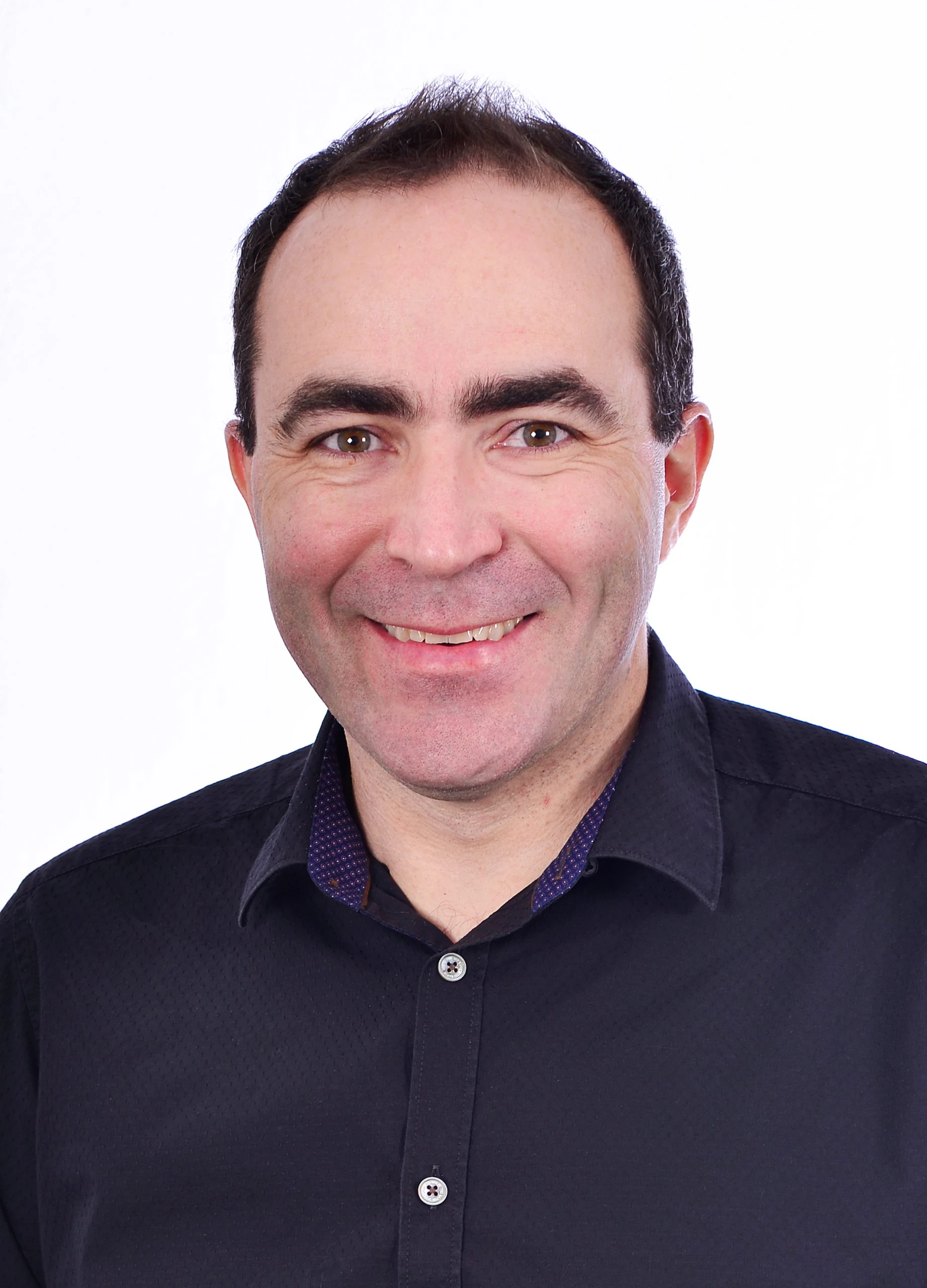
Strip away the language of contracts, order books and event trading and Bernard Marantelli has a blunt description of what is happening inside US sports prediction markets. “Kalshi is a sportsbook that’s just not allowed to have an in-house risk team,” says the founder of White Swan Data, one of the specialist firms now making markets on prediction exchanges.
The difference is all about the risk function. A sportsbook employs traders to price bets and manage its exposure. An exchange provides an API through which firms compete to quote prices and supply liquidity.
“Here’s an API. Bernard and 88 other people can market-make all these request-for-quotes (RFQs),” Marantelli says. “Some people might come in and just do esports because they’re esports experts. Others do everything. Some focus on same-game parlays. But it’s a sportsbook.”
The institutional layer is largely invisible to customers presented with a P2P proposition. Retail users may technically trade against one another, but the depth required by a mass-market product cannot be supplied by occasional customers alone. Professional firms must be prepared to quote continuously and commit substantial capital.
White Swan accounts for 40% of activity on some secondary exchanges
Marantelli says the London-based White Swan is a significant market maker on several secondary exchanges, accounting for as much as 40% of activity on some platforms. Its particular focus is the RFQ, parlay market.
“Just better margins,” he says of that decision. “I think it’s more defendable. It’s the area that fewer people can do well. So I think it’s more defendable margin, more ability to get long-term contracts and beneficial positions.”
Singles can be profitable, but parlay pricing requires the market maker to calculate the correlations between multiple outcomes and respond dynamically to individual requests. It is a skill set built over years in the sharper regions of the existing sports betting ecosystem.
Marantelli identifies White Swan and Susquehanna as two firms operating at industrial scale in parlays, with Jump Trading, Mojo and DL Trading among the possible leading group. Below them are numerous smaller syndicates, some managing between $5 million and $10 million, alongside sports-specific specialists.
Moving rapidly into the US
Enda Kendrick, chief executive of service provider Veltium, similarly says the largest UK and European sharp-betting groups have moved rapidly into US prediction markets. He believes there are also more than 100 smaller operations, ranging from individual traders to teams of around 10, interested in entering the regulated US market.
Yet the presence of professional counterparties complicates the customer-facing idea that prediction markets merely allow users to trade opinions with one another. As Kendrick puts it, two ordinary customers are not going to place $10 million or $20 million behind the Philadelphia Eagles. Markets at that scale require institutions.
For Marantelli, the exchange format could also cause some customers to lose money faster than they would with a conventional sportsbook. The ability to enter and exit positions creates a perception of flexibility, but that optionality can encourage users to commit more of their bankroll.
A customer might buy a team at 55 or 56 cents expecting the price to rise to 58 or 59 cents, he explains. If it falls to 45 cents instead, the trader may refuse to accept the loss and continue holding the position.
Faster, faster, kill, kill
“People will lose money faster on exchanges for lots of reasons,” Marantelli says. “It inherently increases spend, volatility, lots of things. And you’re playing against a sharper audience than you’re playing against at the DraftKings sportsbook.”
He compares the effect with sportsbook cash-out features, which gave customers more apparent control over their bets but may also have encouraged greater spending. The crucial difference is that an exchange customer can be facing a specialist whose entire business is identifying inaccurately priced contracts.
Kendrick sees a warning in the history of betting exchanges. In their early growth phase, there was sufficient retail liquidity for numerous market makers to profit. As that retail pool weakened, the sharper firms increasingly found themselves trading against one another.
His analogy is a poker table at which the weaker participants sustain the game. If those players disappear, the fourth-best professional at the table can suddenly become a loser because only the three strongest remain.
The US addressable market is vastly larger and customer recruitment remains strong. Marantelli says Kalshi increased its number of clients fivefold during the World Cup, while White Swan predicts that NFL prediction markets could generate between $5 billion and $7 billion of liability in a single week.
But he acknowledges the possibility that faster customer losses could eventually test the sustainability of the model.
“They lose quicker, dry up quicker, recruitment or re-recruitment,” he says. “If the recruitment of players dries up, then what are you going to do? Definitely there can be components like that.”
For now, the growth provides room for multiple market makers. Marantelli expects margins to “stay good during the growth period” before contracting as competition intensifies. The more complex RFQ and parlay markets may offer the best protection against that compression.
The result is an emerging ecosystem that looks less like millions of customers casually trading predictions with one another and more like an outsourced sportsbook trading room. Exchanges own the platform and recruit the customers; specialist firms price the risk and provide the money needed to make those markets function.
As Marantelli says: “Let’s call a spade a spade.”
抛开合同、订单簿和事件交易的语言,Bernard Marantelli对美国体育预测市场内部正在发生的事情有一个直白的描述。“Kalshi就是一家体育博彩公司,只是不被允许拥有内部风险团队,”White Swan Data的创始人说道,该公司是如今在预测交易所做市的专业公司之一。
区别全在于风险职能。体育博彩公司雇佣交易员为投注定价并管理其风险敞口。交易所则提供一个API,各公司通过它竞相报价并提供流动性。
“这是一个API。Bernard和其他88个人可以为所有这些报价请求(RFQ)做市,”Marantelli说。“有些人可能只做电竞,因为他们是电竞专家。另一些人什么都做。有些人专注于同场串关。但这就是一家体育博彩公司。”
对于面对P2P模式的客户来说,机构层面基本上是不可见的。散户用户从技术上讲可能是在相互交易,但大众市场产品所需的深度无法仅靠偶尔光顾的客户来提供。专业公司必须准备好持续报价并投入大量资金。
White Swan在某些二级交易所占活动量的40%
Marantelli表示,总部位于伦敦的White Swan是多家二级交易所的重要做市商,在某些平台上占活动量高达40%。其特别专注的是RFQ串关市场。
“只是利润率更好,”他谈到这一决定时说。“我认为这更具防御性。这是能做好的人较少的领域。所以我认为这是更具防御性的利润率,更有能力获得长期合同和有利头寸。”
单场投注可以盈利,但串关定价要求做市商计算多个结果之间的相关性,并对单个请求做出动态响应。这是一套在现有体育博彩生态系统中更精明的领域里多年积累起来的技能。
Marantelli认为White Swan和Susquehanna是两家在串关领域以工业规模运营的公司,Jump Trading、Mojo和DL Trading属于可能的领先集团。在它们之下是众多较小的辛迪加,有些管理着500万至1000万美元的资金,还有针对特定体育项目的专家。
迅速进入美国市场
服务提供商Veltium的首席执行官Enda Kendrick同样表示,英国和欧洲最大的精明投注集团已迅速进入美国预测市场。他认为还有100多家较小的运营机构,从个人交易员到约10人的团队不等,有意进入受监管的美国市场。
然而,专业对手方的存在使面向客户的那种观念变得复杂——即预测市场仅仅允许用户之间交易观点。正如Kendrick所说,两个普通客户不会在费城老鹰队身上下1000万或2000万美元。这种规模的市场需要机构。
对Marantelli来说,交易所形式也可能导致一些客户比在传统体育博彩公司输钱更快。进出头寸的能力营造出一种灵活性的感觉,但这种选择性可能鼓励用户投入更多的资金。
他解释说,客户可能以55或56美分买入一支球队,预期价格会涨到58或59美分。如果价格反而跌到45美分,交易者可能拒绝接受亏损并继续持有头寸。
更快,更快,杀,杀
“人们会在交易所因各种原因更快地输钱,”Marantelli说。“它本质上增加了支出、波动性等很多东西。而且你面对的对手比你在DraftKings体育博彩公司面对的对手更精明。”
他将这种效应与体育博彩公司的兑现功能相比较,后者给了客户对其投注更多表面上的控制权,但也可能鼓励了更大的支出。关键区别在于,交易所客户可能面对的是一个整个业务就是识别定价不准确合约的专家。
Kendrick从博彩交易所的历史中看到了一个警告。在其早期增长阶段,有足够的散户流动性让众多做市商获利。随着散户资金池的减弱,更精明的公司越来越多地发现自己是在相互交易。
他的比喻是一张扑克桌,较弱的参与者维持着游戏。如果这些玩家消失,桌上第四好的职业玩家可能突然变成输家,因为只剩下最强的三个人。
美国的可寻址市场要大得多,客户获取仍然强劲。Marantelli表示,Kalshi在世界杯期间客户数量增长了五倍,而White Swan预测NFL预测市场单周可能产生50亿至70亿美元的责任额。
但他承认,客户更快输钱最终可能考验该模式的可持续性。
“他们输得更快,枯竭得更快,招募或再招募,”他说。“如果玩家的招募枯竭了,那你打算怎么办?肯定会有这样的因素。”
目前,增长为多家做市商提供了空间。Marantelli预计利润率将“在增长期保持良好”,随后随着竞争加剧而收窄。更复杂的RFQ和串关市场可能提供抵御这种压缩的最佳保护。
结果是一个新兴的生态系统,它看起来不太像数百万客户随意地相互交易预测,而更像一个外包的体育博彩交易室。交易所拥有平台并招募客户;专业公司为风险定价并提供使这些市场运转所需的资金。
正如Marantelli所说:“咱们就实话实说吧。”