In recent months, President Lula has significantly stepped up his criticism of online betting companies in Brazil.
In speeches and interviews, he has been reinforcing claims made by a more conservative segment of society that gambling has become a social problem. Citing unverified information, Lula has linked gambling to indebtedness and the erosion of labour conditions.
Lula has repeatedly described these betting companies as a “scourge of lies”, specifically criticising their impact on young people and low-income workers. The president stated that, were it up to him, he would put an end to them. In a speech at the Ministry of Labour, he characterised sports betting as a financial trap for workers.
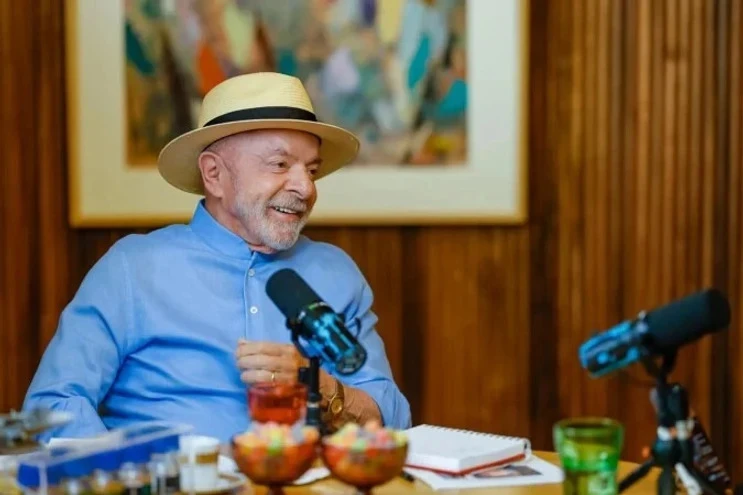
In interviews with two podcasts, Lula renewed his attack on the gambling industry. “If no one can show me a social justification for these betting platforms to continue, we have to put an end to them,” he declared.
Clashes in Congress
Lula stated that he was aware of the existence of the “betting lobby” in Congress, suggesting that the industry exerts political influence to defend its interests. Given this situation, Lula believes that the proposal to abolish the industry will be difficult to implement.
“I know there’s a gambling lobby in Congress,” he said. “But it is a fight we will have to take on, because society cannot be destabilised by something we can control.”
Although he does not voice it, Lula has another concern. Government coffers were bolstered by gambling to the tune of nearly BRL7.3 billion in the first half of 2026. In 2025, Brazil collected nearly BRL10 billion from the activity, excluding concession and regulatory fees. Ending the activity means this revenue stream would be lost, potentially placing further strain on the budget.
The government’s concern is also based on recent data released by the Ministry of Finance. According to Finance Minister Dario Durigan, more than five million Brazilians are already barred from betting.
Beyond the legal and regulatory battle, there is a political-electoral component to Lula’s strategy. The president has used the issue of online betting to reinforce his advocacy for formal employment. Furthermore, he criticises economic models that, in his view, exploit the population’s financial vulnerability.
Dealing with government agencies
Rhetoric against betting has become part of his campaign narrative, linking the fight against the industry to the agenda of social protection and tackling debt.
The president said the government is addressing the issue with the ministries of finance, planning and justice. According to reports, Lula’s goal is to evaluate measures that would help mitigate the effects of betting on society. “We are working with the ministries so that we can take action,” he said.
Illegal market
Lula’s stance against sports betting runs up against a sensitive issue. Banning the activity will not put an end to sports betting and online gambling. It will simply drive them into the illegal market, which accounts for between 38% and 44% of the total, according to a study by LCA and Instituto Locomotiva.
Bernardo Freire, legal counsel for the National Association of Games and Lotteries (ANJL), stated that banning betting websites will drive bettors to illegal platforms. In his view, banning licensed companies amounts to “complicity with crime”.
At an ANJL event with Grupo Globo, he said that shutting down betting sites will strengthen the illegal market. “If 40% of the population is already in this market today, the ban will drive the 60% who bet on licensed platforms to the illegal ones,” he said.
近几个月来,卢拉总统显著加大了对巴西在线博彩公司的批评力度。
在演讲和采访中,他不断强化社会保守派群体的说法,即赌博已成为一个社会问题。卢拉援引未经证实的信息,将赌博与负债和劳动条件恶化联系在一起。
卢拉多次将这些博彩公司描述为“谎言之祸”,特别批评它们对年轻人和低收入劳动者的影响。总统表示,如果由他决定,他会取缔这些公司。在劳工部的一次演讲中,他将体育博彩描述为劳动者的财务陷阱。
在接受两个播客采访时,卢拉再次抨击博彩行业。“如果没有人能向我证明这些博彩平台继续存在的社会合理性,我们就必须取缔它们,”他宣称。
国会中的冲突
卢拉表示,他知晓国会中存在“博彩游说团体”,暗示该行业施加政治影响力以维护自身利益。鉴于这种情况,卢拉认为取缔该行业的提案将难以实施。
“我知道国会里有赌博游说团体,”他说。“但这是一场我们必须迎战的斗争,因为社会不能被我们能够控制的东西所动摇。”
尽管他没有明说,卢拉还有另一个担忧。2026年上半年,政府国库从赌博中获得了近73亿雷亚尔的收入。2025年,巴西从该活动中征收了近100亿雷亚尔,不包括特许经营费和监管费。取缔该活动意味着这一收入来源将消失,可能给预算带来进一步压力。
政府的担忧还基于财政部最近发布的数据。据财政部长达里奥·杜里甘称,已有超过500万巴西人被禁止在博彩平台下注。
除了法律和监管层面的斗争之外,卢拉的战略还包含政治选举因素。总统利用在线博彩问题来强化他对正规就业的倡导。此外,他还批评在他看来剥削民众财务脆弱性的经济模式。
与政府机构的协作
反对博彩的言论已成为其竞选叙事的一部分,将打击该行业与社会保护和解决债务的议程联系在一起。
总统表示,政府正在与财政部、计划部和司法部共同处理这一问题。据报道,卢拉的目标是评估有助于减轻博彩对社会影响的措施。“我们正在与各部委合作,以便能够采取行动,”他说。
非法市场
卢拉反对体育博彩的立场面临一个敏感问题。禁止该活动并不会终结体育博彩和在线赌博。它只会将其推向非法市场,据LCA和Locomotiva研究所的一项研究,非法市场占总量的38%至44%。
全国游戏和彩票协会(ANJL)的法律顾问贝尔纳多·弗雷雷表示,禁止博彩网站将把投注者推向非法平台。在他看来,取缔持牌公司等同于“与犯罪同谋”。
在ANJL与Grupo Globo联合举办的一次活动上,他表示关闭博彩网站将壮大规模非法市场。“如果今天已有40%的人口在这个市场中,禁令将把在持牌平台下注的60%推向非法平台,”他说。